What this calculator does
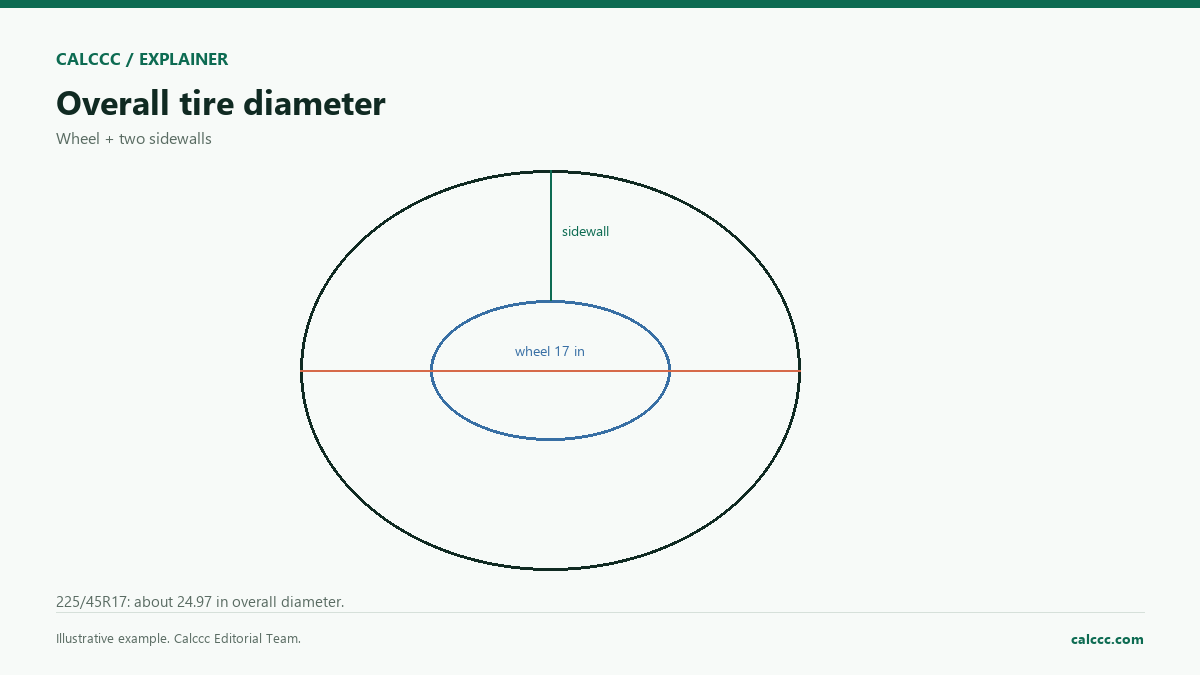
Tire size affects gearing, clearance, ride comfort, and the accuracy of the speedometer. This calculator compares the nominal dimensions of two sizes. It is a planning tool, not a fitment guarantee.
How to use it
- Enter the current tire's width, aspect ratio, and wheel diameter.
- Enter the new tire's dimensions.
- Enter the speedometer reading you want to check.
- Review the diameter change, circumference, and actual speed.
How it works
Example calculations
Example: 225/45R17 to 235/45R17
The new tire is about 1.42% larger in diameter. When the speedometer reads 60 mph, actual speed is about 60.9 mph.
Plus sizing
A larger wheel with a lower aspect ratio can keep the overall diameter close to stock while changing the sidewall.
What the result means
A diameter change also changes effective gear ratio and may affect clearance, load capacity, and speed rating. The nominal size can differ from the actual measured tire. Check the door placard and consult a tire professional before changing sizes.
Common mistakes
- Assuming a wider tire always improves grip.
- Ignoring load index and speed rating.
- Forgetting that a larger diameter raises the car and changes gearing.
- Using nominal dimensions as exact measurements.
Assumptions and limits
- Sizes are nominal.
- Speedometer error is proportional to diameter.
- No clearance or load-rating check.
- Wheel width and offset are not modeled.
- Actual tire dimensions vary by model.
Frequently asked questions
How much speedometer error is acceptable?
Even a 1–2% difference can matter. A larger tire makes the speedometer read lower than actual speed. Check local rules and the vehicle's calibration.
Can I change the wheel diameter?
Yes, if the overall diameter, clearance, load rating, and wheel width are appropriate. Use a professional fitment check.
Does tire width affect fuel economy?
Wider tires can increase rolling resistance and drag, but the effect depends on the tire, pressure, and driving.
Sources
2026 update
How to use the professional output
This page is not just a formula box. The result is designed to be checked, compared, and taken away.
- Professional worksheet. The result includes the inputs used, the method and scope, and a one-variable sensitivity check for finance calculators.
- A/B scenarios. Save two input sets in the browser and compare the primary, secondary, and breakdown figures side by side.
- Print / PDF and CSV. Print a branded worksheet, or export the year-by-year table when the calculator produces one.
The formulas and assumptions above still govern the number. The worksheet makes the estimate auditable; it does not make it a lender quote, tax return, or personalized advice.
Go deeper