


Key takeaways
- It is a second mortgage. The lender can foreclose if you default.
- Combined LTV limits the loan. Home value × maximum LTV − mortgage balance.
- The payment is fixed. A home equity loan is usually fixed-rate and fully amortizing; a HELOC is usually a variable-rate line.
- Closing costs still apply. Appraisal, title, and lender fees can reduce the net benefit.
- Do not borrow the maximum just because it is available. Keep a reserve and a clear use for the money.
How the loan is sized
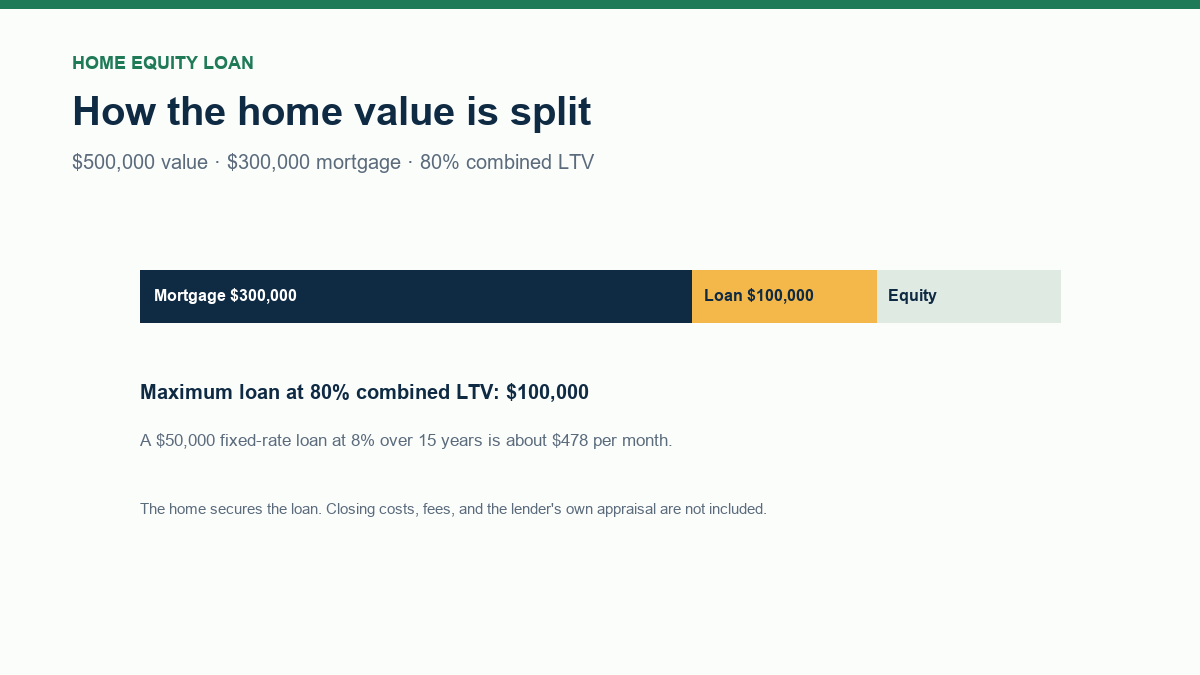
A home equity loan is a second mortgage. The lender looks at the home’s appraised value, the existing mortgage balance, and the maximum combined loan-to-value ratio. If the home is worth $500,000, the mortgage is $300,000, and the maximum combined LTV is 80%, the total debt limit is $400,000. The potential home equity loan is $100,000.
The lender may approve less than the formula suggests because of credit, income, property condition, or its own appraisal. The formula is a starting point, not a commitment.
Payment and total interest
A home equity loan is usually fully amortizing: each payment includes principal and interest, and the balance reaches zero at the end of the term. A $50,000 loan at 8% over 15 years costs about $478 per month and about $36,000 in total interest.
A shorter term raises the monthly payment but lowers total interest. A longer term lowers the payment but increases the total cost. Compare both with your budget and your expected time in the home.
Home equity loan versus HELOC
A home equity loan gives you a lump sum with a fixed rate and fixed term. A HELOC is a revolving line that you can draw from, repay, and draw again, usually with a variable rate and a draw period followed by a repayment period. A loan is better for a known, one-time cost; a line is more flexible for staged projects or uncertain timing.
Both are secured by the home. Both can have closing costs. Compare the rate, fees, draw structure, repayment terms, and variable-rate risk, not just the initial payment.
Risks and sensible uses
The biggest risk is foreclosure. A home equity loan converts unsecured debt into secured debt. If you use it to consolidate credit cards but do not fix the spending that created the balances, you can end up with both the loan and new card debt.
Common uses include a needed renovation, a debt consolidation with a clear payoff plan, or a major expense with a stable repayment source. A vacation, a depreciating purchase, or a speculative investment is a weaker use of home equity.
Closing costs and alternatives
A home equity loan is not free money. Appraisal, title search, recording, lender fees, and possibly points can add hundreds or thousands of dollars. Compare the annual percentage rate, not just the interest rate, and ask for a Loan Estimate. A cash-out refinance, a HELOC, or an unsecured personal loan may be a better fit depending on the amount, term, and risk.
A cash-out refinance replaces the first mortgage and can change the rate on the entire balance. A HELOC offers flexibility but usually has a variable rate. A personal loan is unsecured but may have a higher rate. Match the product to the use and the repayment source.
When not to use home equity
Do not use home equity to finance a lifestyle that your income cannot support, to speculate on a volatile investment, or to consolidate debt without changing the behavior that created it. If the repayment depends on a bonus, a sale, or an uncertain income increase, the risk is higher than the calculator shows.
2026 calculator update: what changed
The linked calculator has been upgraded. It now includes a professional worksheet with the inputs used, the method and scope, and a one-variable sensitivity check for finance tools. You can save two input sets as Scenarios A/B and compare the results side by side. The Print / PDF action produces a branded worksheet, and table-producing calculators can export a CSV.
The page also explains why a bank, lender, broker, or provider can quote a different number: rate versus APR, fees, credit pricing, taxes, insurance, and timing. Use the written quote or Loan Estimate as the binding document, not the calculator estimate.
Borrowing against equity
A home equity loan is a second mortgage with a fixed rate and payment. The lender uses the home as collateral, so default risks the home. Compare the APR, closing costs, term, and total cost with a HELOC or cash-out refinance.
What to compare
Compare the rate, fees, term, and total cost. A lower payment with a longer term can cost more overall.
Compare the loan with a HELOC and a cash-out refinance.
Now compare the total cost.
Compare the loan with a HELOC and a cash-out refinance on total cost.
Frequently asked questions
How much can I borrow with a home equity loan?
A common limit is home value times the maximum combined LTV minus the mortgage balance. The lender’s appraisal and underwriting can reduce it.
Is a home equity loan fixed or variable?
Home equity loans are usually fixed-rate installment loans. HELOCs are usually variable-rate revolving lines.
What is combined LTV?
Combined LTV is the total of the mortgage and home equity loan divided by the home value.
Can I lose my home?
Yes. A home equity loan is secured by the home. Missing payments can lead to foreclosure.
Further reading
Keep exploring
Decision path