


Key takeaways
- Use pre-pregnancy BMI. Current weight changes during pregnancy and is not the right starting point for the range.
- The ranges are for singleton pregnancies. Twins and higher-order pregnancies have different guidance.
- The first trimester is different. Total gain is small compared with the weekly pace later.
- Weekly numbers are planning aids. Fluid, food, and timing can move a single measurement.
- Do not diet during pregnancy without medical guidance. Nutrition and weight goals should be individualised.
Why BMI is used
Pre-pregnancy body mass index groups people into underweight, normal weight, overweight, and obesity. The groups are broad, but they are the basis for population-level weight-gain guidance. BMI does not measure body composition, health, or pregnancy risk on its own.
Use the weight you had before pregnancy, not the weight at the first prenatal visit. If you are unsure, ask your clinician which starting weight they are using.
The total ranges
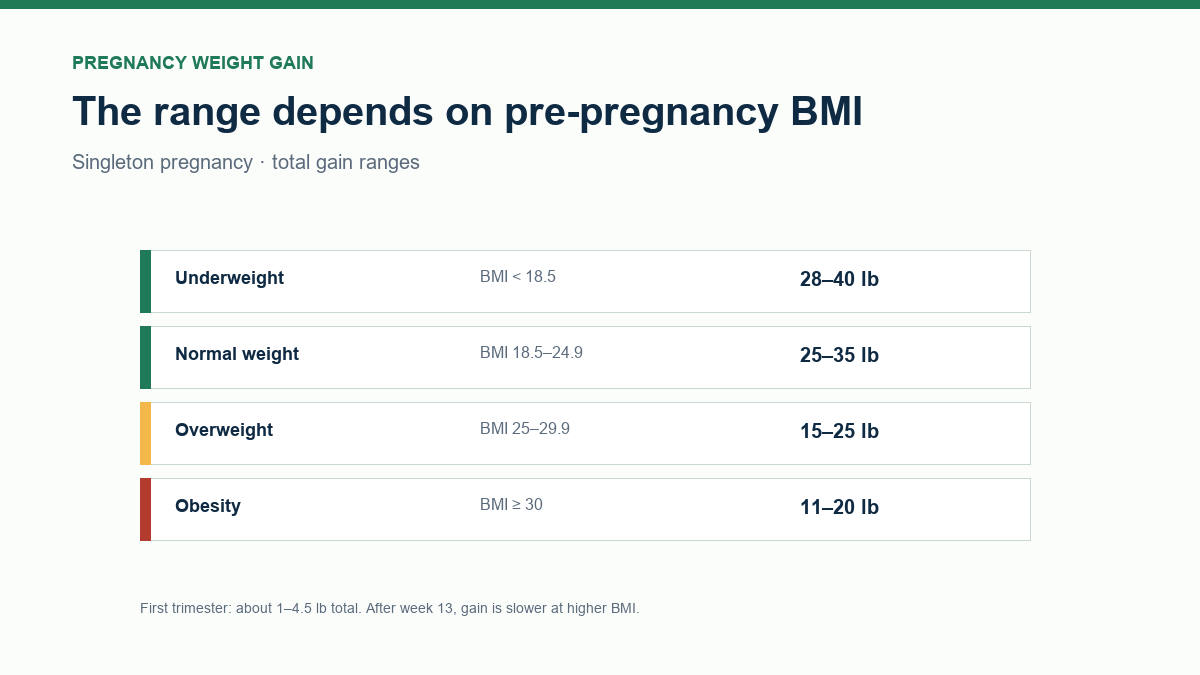
For a singleton pregnancy, the commonly cited total ranges are:
- Underweight (BMI below 18.5): 28–40 lb (about 12.5–18 kg).
- Normal weight (BMI 18.5–24.9): 25–35 lb (about 11.5–16 kg).
- Overweight (BMI 25–29.9): 15–25 lb (about 7–11.5 kg).
- Obesity (BMI 30 or higher): 11–20 lb (about 5–9 kg).
These are ranges, not a single target. Two people with the same BMI can have different clinical situations and different recommendations.
First trimester and later gain
The first trimester usually accounts for about 1–4.5 lb total. Nausea, appetite changes, and fluid shifts can make the scale move in ways that do not reflect fetal growth. After week 13, the pace often settles into a more predictable range.
Common planning rates after the first trimester are about 0.8–1 lb per week for underweight or normal-weight pregnancies, 0.6–0.8 lb per week for overweight, and 0.4–0.6 lb per week for obesity. These are averages, not daily rules.
A worked example
A person who weighs 65 kg and is 165 cm tall has a pre-pregnancy BMI of about 23.9, in the normal-weight range. The total recommended gain is 25–35 lb (about 11.3–15.9 kg). At week 20, the planning range is roughly 6.6–11.5 lb (about 3–5.2 kg).
A person with a pre-pregnancy BMI of 32 is in the obesity range. The total range is 11–20 lb, and the later weekly pace is slower. The same weekly number does not apply to every BMI group.
What the number cannot tell you
A weight-gain range cannot diagnose a problem or guarantee a healthy pregnancy. It does not account for twins, gestational diabetes, high blood pressure, severe nausea, or fluid retention. Sudden weight gain, swelling, or a change in symptoms should be discussed with a clinician rather than managed with a calculator.
Do not restrict food to hit a number. Pregnancy requires adequate energy, protein, vitamins, and fluids. If you are worried about your weight pattern, ask your prenatal clinician for individual guidance.
Nutrition and monitoring without chasing a number
Weight is one signal among many. Prenatal visits may include blood pressure, fundal height, fetal growth, glucose screening, and symptoms. A number on the scale does not replace those checks, and a single visit outside the range is not a diagnosis.
Focus on regular meals, adequate protein, iron, folate, calcium, and fluids rather than restrictive dieting. If nausea or food aversions make eating difficult, ask your clinician for practical options. If weight gain is very rapid, or if swelling and other symptoms appear suddenly, seek medical advice rather than adjusting the calculator.
2026 calculator update: what changed
The linked calculator has been upgraded. It now includes a professional worksheet with the inputs used, the method and scope, and a one-variable sensitivity check for finance tools. You can save two input sets as Scenarios A/B and compare the results side by side. The Print / PDF action produces a branded worksheet, and table-producing calculators can export a CSV.
For health tools, the worksheet makes the inputs and assumptions visible, but it does not replace a clinician. Use the print view when you want to discuss the result with a professional.
Range, not a single number
Recommended weight gain depends on pre-pregnancy BMI and whether it is a singleton or multiple pregnancy. The ranges are guidelines; the clinician tracks the trend. Do not compare to a single target without context.
What to compare
Compare the pre-pregnancy BMI, the current weight, and the clinician’s range. Persistent concerns need medical advice.
Now compare the range with the clinician’s guidance.
Compare the range with the clinician’s guidance and the trend over time.
Frequently asked questions
How much weight should I gain during pregnancy?
For a singleton pregnancy, common ranges are 28–40 lb for underweight, 25–35 lb for normal weight, 15–25 lb for overweight, and 11–20 lb for obesity. Your clinician may set a different target.
Is the weekly range exact?
No. It is a planning estimate based on population guidance. Normal gain varies and should be assessed over time by your clinician.
Does this calculator work for twins?
No. Multiple pregnancies have different guidance. Ask your clinician for a multiple-pregnancy target.
Should I diet during pregnancy?
Do not start a weight-loss diet during pregnancy without medical guidance. Discuss nutrition and weight goals with your prenatal clinician.
Further reading