What this calculator does
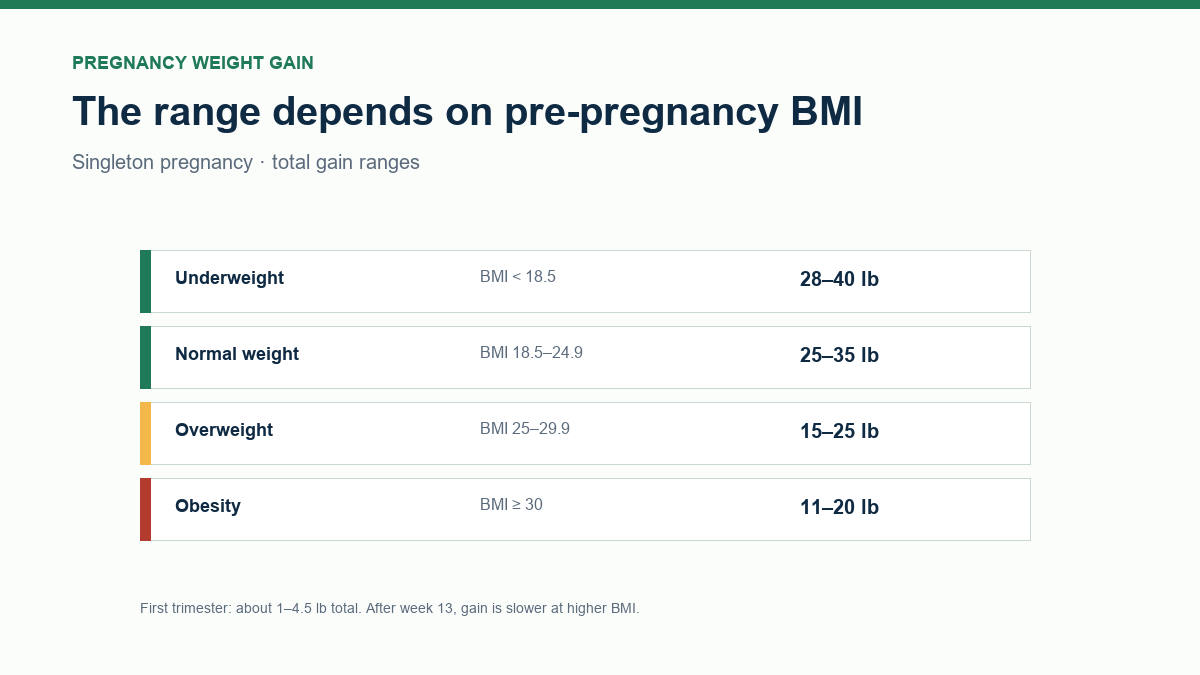
Pregnancy weight gain guidance is based on pre-pregnancy BMI. The ranges below are population guidelines for singleton pregnancies, not an individual prescription. Your clinician may adjust the target for twins, gestational diabetes, high blood pressure, or other conditions.
How to use it
- Choose metric or imperial units.
- Enter your pre-pregnancy weight, not your current weight.
- Enter your height without shoes.
- Enter the current pregnancy week.
- Review the total range and the planning range at this week.
- Discuss any concerns with your prenatal clinician.
How it works
Example calculations
Example: 65 kg, 165 cm, week 20
BMI is 23.9, in the normal-weight range. The total recommended gain is 25–35 lb (11.3–15.9 kg). At week 20, the planning range is roughly 6.6–11.5 lb (3.0–5.2 kg).
Example: higher BMI
A pre-pregnancy BMI of 32 falls in the obesity range. The total recommended gain is 11–20 lb, with a slower weekly rate after the first trimester.
What the result means
The weekly range is a planning aid, not a rule. Weight can fluctuate with fluid, food, and time of day. A single measurement outside the range is not a diagnosis. If you are losing weight, gaining very quickly, or worried about your pattern, contact your prenatal clinician.
Common mistakes
- Using current weight instead of pre-pregnancy weight.
- Applying singleton ranges to a twin pregnancy.
- Restricting food to hit a number without medical guidance.
- Treating a weekly estimate as a prescription.
- Ignoring swelling, sudden weight change, or other symptoms.
Assumptions and limits
- Singleton pregnancy.
- Pre-pregnancy BMI is calculated from pre-pregnancy weight.
- The current week is between 0 and 42.
- No medical condition changes the recommended range.
Frequently asked questions
How much weight should I gain during pregnancy?
For a singleton pregnancy, the general ranges are 28–40 lb for underweight, 25–35 lb for normal weight, 15–25 lb for overweight, and 11–20 lb for obesity. Your clinician may set a different target.
Is the weekly range exact?
No. It is a planning estimate based on population guidance. Normal weight gain varies and should be assessed over time by your clinician.
Does this calculator work for twins?
No. Twin and multiple pregnancies have different guidance. Ask your clinician for a multiple-pregnancy target.
Should I diet during pregnancy?
Do not start a weight-loss diet during pregnancy without medical guidance. Discuss nutrition and weight goals with your prenatal clinician.
Sources
2026 update
How to use the professional output
This page is not just a formula box. The result is designed to be checked, compared, and taken away.
- Professional worksheet. The result includes the inputs used, the method and scope, and a one-variable sensitivity check for finance calculators.
- A/B scenarios. Save two input sets in the browser and compare the primary, secondary, and breakdown figures side by side.
- Print / PDF and CSV. Print a branded worksheet, or export the year-by-year table when the calculator produces one.
The formulas and assumptions above still govern the number. The worksheet makes the estimate auditable; it does not make it a lender quote, tax return, or personalized advice.
Go deeper