


Key takeaways
- Volume and distance are the largest cost drivers.
- Stairs, long carries, elevators, and parking add labor time.
- A binding estimate and a non-binding estimate are different products.
- Check the mover’s FMCSA registration and complaint history.
- Budget for tips, supplies, storage, and valuation coverage.
Distance is only one input
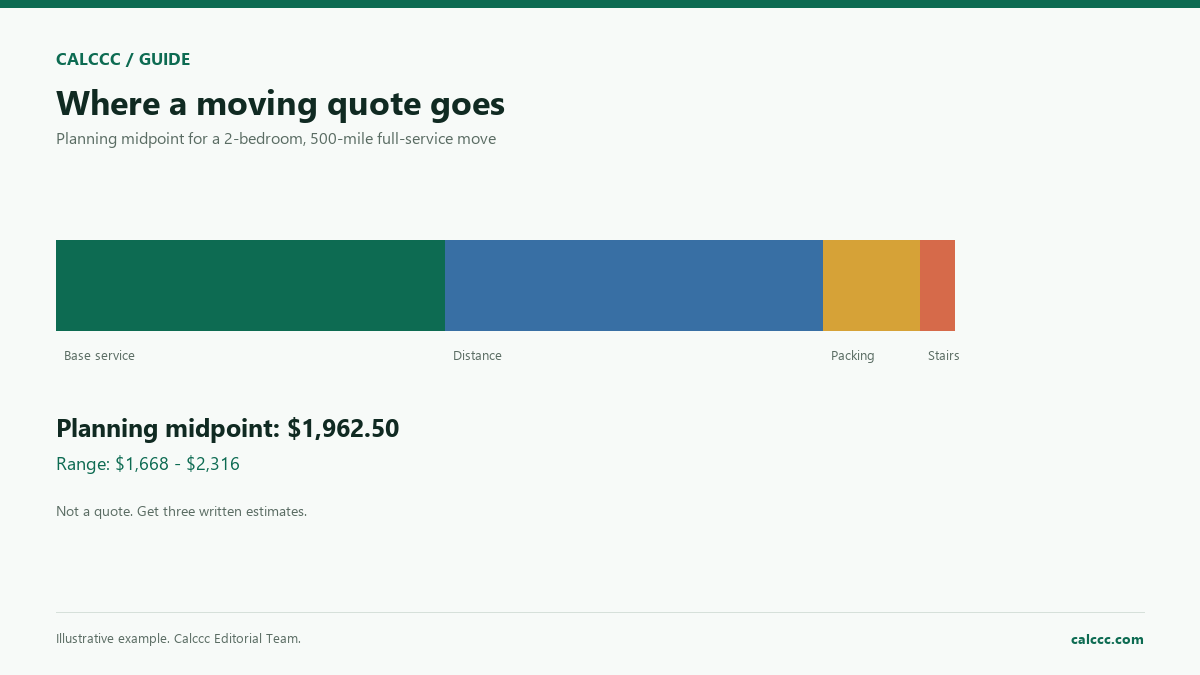
Interstate moves are often priced on weight and distance, while local moves are often priced hourly. A 500-mile move with a small shipment can cost less than a 50-mile move with a packed four-bedroom house. The calculator uses home size as a proxy for volume, then adds a per-mile charge, packing, and stairs. That is enough for a planning range, not a quote.
Fuel, tolls, and the carrier’s tariff can change the per-mile charge. Dates matter too: the end of the month and summer are busy, and a flexible mid-month date can be cheaper.
Full-service versus DIY
Full-service movers provide labor, truck, and often packing. DIY truck rental is cheaper on paper, but you supply labor, fuel, tolls, insurance, and time. Loading and unloading a truck safely is physical work; a injury or damaged item can erase the savings. The right choice depends on the size of the move, your help, and how much time you can take off.
A hybrid move—rental truck plus hired loading labor—can be a middle path. Compare the total cost, not just the truck rental rate.
Access can decide the job
A third-floor walk-up, a long carry from the truck, a narrow street, or a building that requires a COI and a service elevator all add time. Tell the estimator about stairs, elevators, parking, and the distance from the truck to the door. If the quote assumes easy access and the reality is different, the final bill can rise.
Binding, non-binding, and hourly
A binding estimate fixes the price for the listed services, but the inventory and access must be accurate. A non-binding estimate is a projection; the final charge can be higher or lower based on actual weight and services. A binding not-to-exceed estimate caps the price but may still change if you add services. Local hourly moves are billed by time, so the crew size and pace matter.
Ask which type you are signing and what can change the price. The estimate should list the tariff, valuation coverage, and payment terms.
Check the mover before you book
For interstate moves, use FMCSA’s Protect Your Move tools. Check the USDOT number, registration status, insurance, and complaint history. Get the physical address and a written estimate. Be wary of a company that answers the phone with a generic name, demands a large cash deposit, or refuses to show its registration.
Build a realistic budget
Add 10–15% contingency for unexpected access, packing materials, or a date change. Include tips for crews, utility deposits, storage, and the cost of replacing items that are not covered by valuation. Keep receipts and photos of high-value items. If your employer reimburses relocation, check which categories are covered before you book.
Local moves are a different product
A local move is usually billed hourly with a minimum charge, while an interstate move is usually priced on weight and distance. That means the same home can produce very different quotes depending on whether the move stays inside a metro area. Ask which tariff applies, whether travel time is billed, and whether the crew size is fixed. For a local move, the number of hours and the crew’s pace matter more than the mileage.
Frequently Asked Questions
Is the cheapest quote the best?
Not necessarily. A very low quote may exclude packing, stairs, or valuation, or it may be a bait price. Compare the scope and the estimate type.
How far in advance should I book?
For a summer or end-of-month move, several weeks to a few months is safer. Off-peak dates have more flexibility.
Does the calculator include tips?
No. Tips, supplies, storage, and valuation coverage are separate. Add them to the range.
What is valuation coverage?
It is not the same as homeowner’s insurance. It sets the mover’s liability for loss or damage. Ask for the coverage level and the claims process in writing.
How we checked this guide
We compared the calculator’s assumptions with FMCSA and FTC consumer guidance and tested the arithmetic with a standard 2-bedroom, 500-mile example. The result is a planning range, not a carrier quote.
What to include
A moving budget includes the truck or movers, packing supplies, insurance, deposits, utility transfers, and the cost of the first month in the new place. A “free” move with friends still has fuel, food, and time. Get two written estimates and compare the scope: packing, stairs, mileage, and timing.
What to compare
Compare the total cost, the scope, and the insurance. The lowest quote may exclude packing or stairs.
Keep every estimate and receipt; the final bill should match the written scope.
Compare the final bill with the estimate line by line.
Now compare it.
Compare the final bill with the written estimate line by line.
2026 calculator update: what changed
The linked calculator has been upgraded. It now includes a professional worksheet with the inputs used, the method and scope, and a one-variable sensitivity check for finance tools. You can save two input sets as Scenarios A/B and compare the results side by side. The Print / PDF action produces a branded worksheet, and table-producing calculators can export a CSV.
Further reading