


Key takeaways
- Most adults need 7–9 hours of sleep, but individual needs vary.
- Sleep debt accumulates over days and weeks, not just one night.
- Weekend recovery sleep helps, but it is not a full reset.
- Consistent sleep and wake times matter as much as total hours.
- Loud snoring, gasping, or severe daytime sleepiness needs medical evaluation.
What sleep debt is
Sleep debt is not a bill you can pay once. It is a way to describe the gap between sleep need and sleep obtained. If your target is eight hours and you sleep six for five nights, you have a 10-hour gap. The body does not simply forget it.
Sleep affects attention, mood, glucose regulation, immune function, and cardiovascular health. Short sleep can also increase appetite and make physical activity feel harder. The effects are not just “feeling tired.”
How much sleep do adults need?
Most adults need seven to nine hours per night, according to major sleep and health organizations. Some people need more; a few need less. The right amount is the amount that lets you wake up refreshed and function well without relying on caffeine to get through the day.
Sleep need changes with age, pregnancy, illness, and recovery from sleep loss. Athletes and people with physically demanding jobs may need more.
How the debt adds up
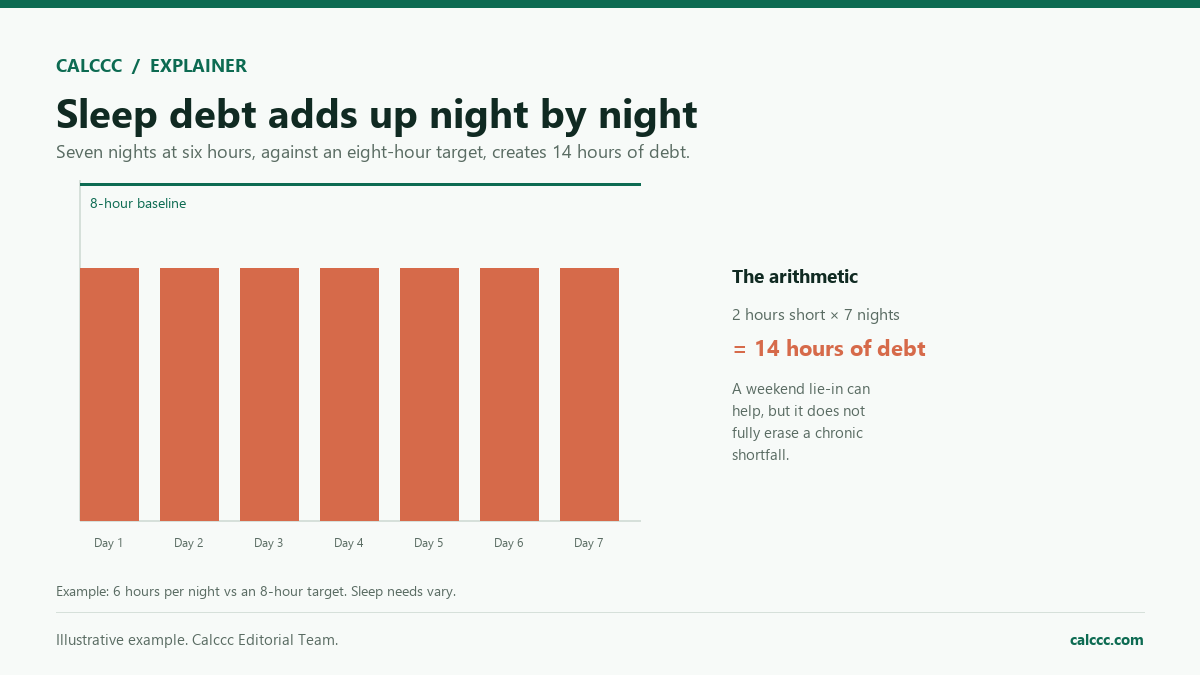
Example: a target of eight hours, six hours per night for seven nights. The gap is 2 × 7 = 14 hours — nearly two full nights of sleep. That is a large debt, even if you feel “used to it.”
Can you catch up?
Recovery sleep can improve alertness and mood, and it may reduce some of the immediate effects of short sleep. But studies of chronic sleep restriction suggest that catching up on the weekend does not fully restore performance, metabolism, or health markers. The best strategy is to prevent the debt from accumulating.
If you have one short night, a slightly longer night or a short nap can help. If you are short every week, a weekend lie-in is not a substitute for a consistent schedule.
Naps: useful, not a cure
A short nap — roughly 20 minutes — can improve alertness without much grogginess. Longer naps can cause sleep inertia and may make it harder to fall asleep at night. If you nap, keep it early and short, and do not use it to replace nighttime sleep on a regular basis.
What helps sleep debt
- Consistent schedule: wake at roughly the same time, including weekends.
- Morning light: daylight helps anchor the body clock.
- Wind-down routine: dim lights, reduce screens, and keep the room cool and dark.
- Limit late caffeine and alcohol: both can disrupt sleep quality.
- Protect sleep opportunity: treat bedtime as a scheduled appointment.
Shift work and irregular schedules
Shift workers face a real mismatch between the body clock and the schedule. Strategies include strategic caffeine early in the shift, planned naps, blackout curtains, and a consistent sleep window on days off. A sleep specialist can help design a plan.
2026 calculator update: what changed
The linked calculator has been upgraded. It now includes a professional worksheet with the inputs used, the method and scope, and a one-variable sensitivity check for finance tools. You can save two input sets as Scenarios A/B and compare the results side by side. The Print / PDF action produces a branded worksheet, and table-producing calculators can export a CSV.
For health tools, the worksheet makes the inputs and assumptions visible, but it does not replace a clinician. Use the print view when you want to discuss the result with a professional.
Repaying sleep debt
Sleep debt is the gap between the sleep you need and the sleep you get. A short night can be partly recovered with a longer night, but chronic debt is harder to repay. A consistent schedule and a dark, quiet room help more than a weekend lie-in.
What to compare
Compare the weekly sleep total with the need, and the trend over time. Persistent sleepiness needs medical advice.
Compare the weekly total with the sleep need.
Now check it.
Compare the weekly total with the sleep need and the trend.
Frequently asked questions
Does sleep debt reset after one good night?
One good night can improve how you feel, but it does not fully erase a large accumulated debt. Consistency over several nights is better.
Can I sleep extra on weekends?
It can help, but it may shift your body clock and make Monday harder. A modest catch-up is usually better than a large weekend swing.
Is eight hours the magic number?
No. Seven to nine is a common adult range. The best number is the one that supports alertness and health for you.
When should I see a doctor?
If you snore loudly, gasp, wake unrefreshed despite enough time in bed, or feel dangerously sleepy during the day, seek medical advice.
How we checked this guide
We compared the sleep-need range with CDC and NHLBI guidance and used the calculator’s debt arithmetic for the example. The 14-hour figure is simple subtraction, not a clinical measurement. Sleep disorders require professional evaluation.
Further reading