What this calculator does
The “multiply by seven” rule is a simplification. Dogs mature faster in their first two years, and larger dogs often age faster later in life. This calculator uses a common size-based estimate, but it is not a biological measurement or a veterinary diagnosis.
How to use it
- Enter your dog's age in years.
- Choose the size group based on adult weight.
- Review the human-age estimate and life stage.
- Use the result as a conversation starter, not a health assessment.
How it works
Example calculations
Example: 5-year-old medium dog
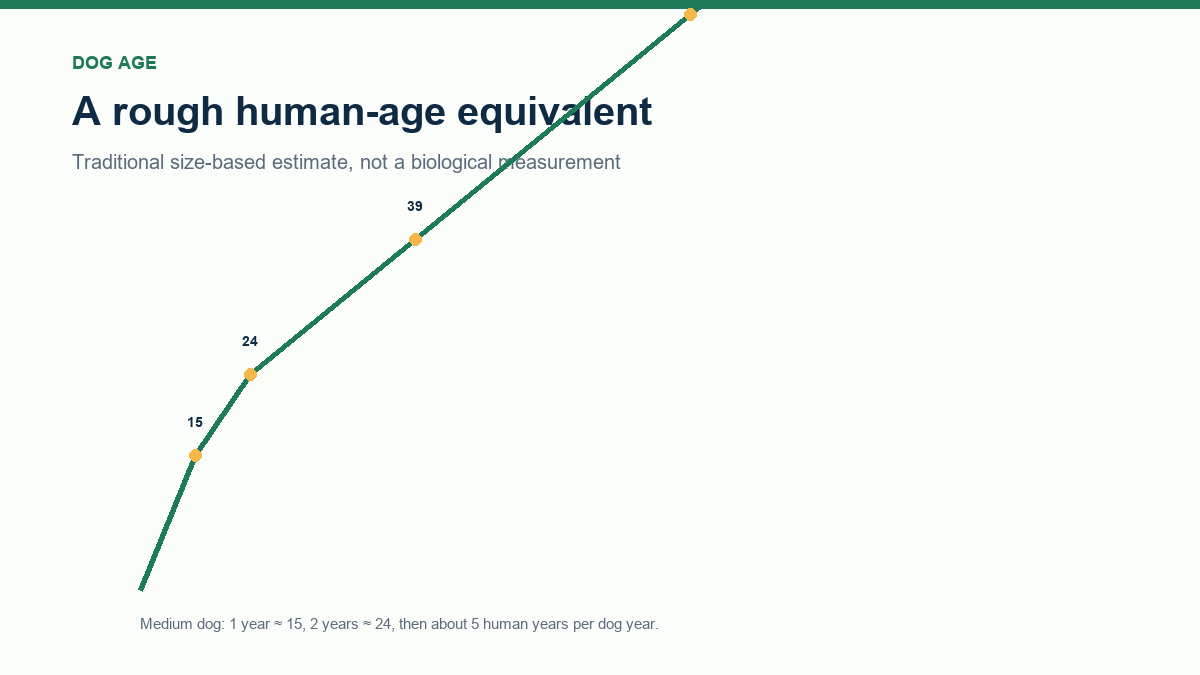
The estimate is 24 + 3 x 5 = 39 human years, with an adult life stage.
Example: 10-year-old large dog
The estimate is 24 + 8 x 6 = 72 human years, with a senior life stage.
What the result means
The estimate is a rough comparison, not a prediction of lifespan. Body size, breed, genetics, dental care, nutrition, and veterinary care all affect aging. A veterinarian can assess health and senior-care needs directly.
Common mistakes
- Using the same multiplier for every breed and size.
- Treating the human-age estimate as a medical assessment.
- Ignoring changes in weight, mobility, or behavior.
- Assuming a small dog and a giant dog of the same age are equally old.
Assumptions and limits
- The dog's age is known.
- The size group is based on adult weight.
- The traditional estimate is used, not a breed-specific formula.
- No health or lifespan prediction is made.
Frequently asked questions
Is one dog year really seven human years?
No. That is a rough shortcut. Dogs mature faster in the first two years, and size affects later aging.
Why do large dogs age faster?
Large and giant breeds often have shorter lifespans and different age-related health patterns. The estimate uses a faster rate for larger dogs.
Does this calculator work for puppies?
It gives a rough first-year estimate, but puppy development is not linear. Use veterinary guidance for growth and vaccination schedules.
Can I use this to decide senior care?
No. Ask a veterinarian. Senior-care decisions depend on health, mobility, dental condition, and lab work.
Sources
2026 update
How to use the professional output
This page is not just a formula box. The result is designed to be checked, compared, and taken away.
- Professional worksheet. The result includes the inputs used, the method and scope, and a one-variable sensitivity check for finance calculators.
- A/B scenarios. Save two input sets in the browser and compare the primary, secondary, and breakdown figures side by side.
- Print / PDF and CSV. Print a branded worksheet, or export the year-by-year table when the calculator produces one.
The formulas and assumptions above still govern the number. The worksheet makes the estimate auditable; it does not make it a lender quote, tax return, or personalized advice.
Go deeper