What this calculator does
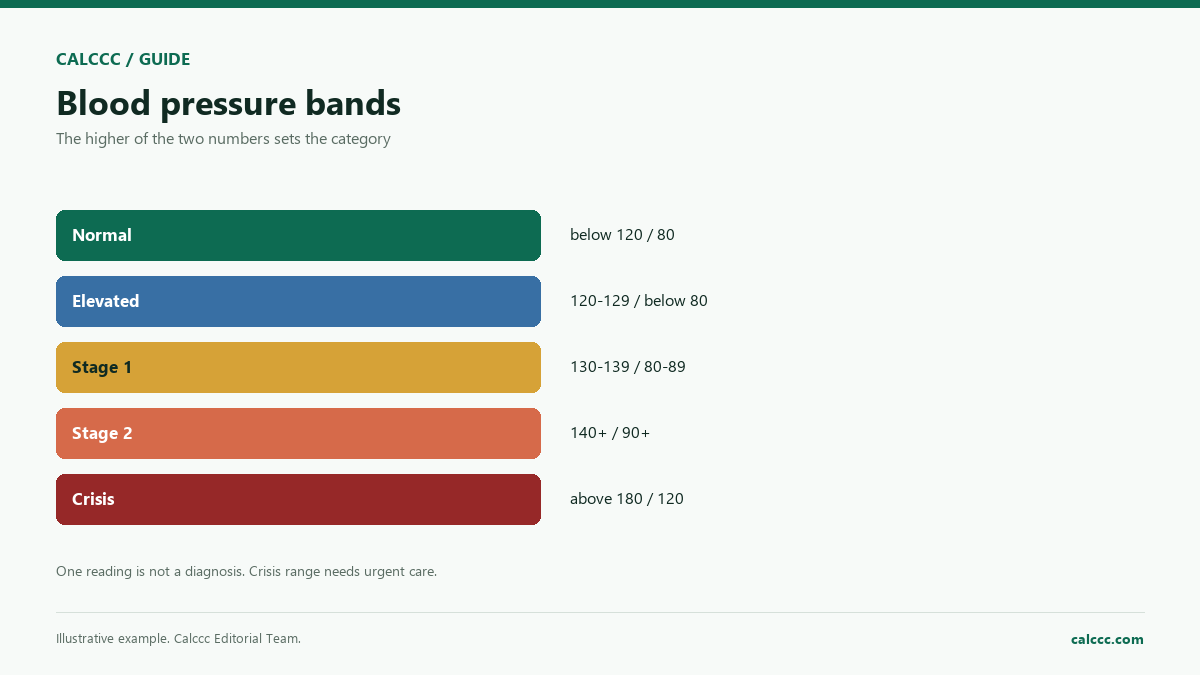
A blood pressure reading has two numbers. The top number, systolic pressure, is the pressure when the heart contracts. The bottom number, diastolic pressure, is the pressure when the heart relaxes between beats. The category is not a diagnosis, and one reading is not enough to diagnose hypertension. This tool gives a clear starting point for a conversation with a clinician.
How to use it
- Sit quietly for five minutes before measuring.
- Use a validated upper-arm cuff and the correct cuff size.
- Enter the systolic and diastolic numbers from the same reading.
- Optionally enter your pulse.
- Review the category, pulse pressure, and mean arterial pressure; recheck before drawing conclusions.
How it works
Example calculations
Example 1: 118/76
Both numbers are below the elevated threshold, so the reading falls in the normal band. That does not replace a clinician's assessment of overall risk.
Example 2: 135/82
Systolic is in the stage 1 range and diastolic is also stage 1, so the category is stage 1 hypertension. A repeat reading and clinical follow-up are appropriate.
Example 3: 185/100
Systolic is above 180, which is the hypertensive crisis range. The tool flags urgent care. If symptoms such as chest pain, weakness, confusion, or trouble breathing are present, call emergency services.
What the result means
Blood pressure categories describe a reading, not a person. A single high reading can reflect stress, caffeine, a full bladder, talking during the measurement, or an incorrectly sized cuff. Guidelines generally rely on repeated readings over time. Pulse pressure can be wide in older adults with stiffness in the arteries; mean arterial pressure is a derived value, not a replacement for the two measured numbers.
Common mistakes
- Diagnosing yourself from one reading.
- Using a wrist or finger cuff without validating it against an upper-arm cuff.
- Measuring right after exercise, coffee, or smoking.
- Ignoring symptoms because the number looks only mildly high.
Assumptions and limits
- The reading came from a validated upper-arm cuff.
- Systolic and diastolic are entered in mmHg.
- The category follows standard adult office thresholds.
- Pregnancy, children, and some chronic conditions use different targets.
- This tool does not diagnose hypertension or choose treatment.
Frequently asked questions
What is a hypertensive crisis?
A reading above 180 systolic or above 120 diastolic is in the crisis range. If it is accompanied by chest pain, shortness of breath, weakness, vision changes, confusion, or difficulty speaking, call emergency services immediately.
Is one high reading enough to diagnose hypertension?
Usually no. Clinicians typically confirm with repeated readings, and some use home monitoring or ambulatory monitoring. The category is a screening signal.
What is pulse pressure?
Pulse pressure is systolic minus diastolic. A wider pulse pressure can be associated with arterial stiffness, but it needs clinical context.
What is mean arterial pressure?
MAP approximates the average pressure driving blood through the arteries during one cardiac cycle. The calculator uses (systolic + 2 x diastolic) / 3, a common approximation.
Which number matters more?
Both matter. For older adults, systolic pressure often carries more weight; for younger adults, diastolic pressure can be an earlier signal. The higher category usually guides the label.
Sources
2026 update
How to use the professional output
This page is not just a formula box. The result is designed to be checked, compared, and taken away.
- Professional worksheet. The result includes the inputs used, the method and scope, and a one-variable sensitivity check for finance calculators.
- A/B scenarios. Save two input sets in the browser and compare the primary, secondary, and breakdown figures side by side.
- Print / PDF and CSV. Print a branded worksheet, or export the year-by-year table when the calculator produces one.
The formulas and assumptions above still govern the number. The worksheet makes the estimate auditable; it does not make it a lender quote, tax return, or personalized advice.
Go deeper