What this calculator does
Blood alcohol content is a legal and medical measure, not a feeling. The Widmark formula estimates it from the alcohol consumed, body weight, sex, and elapsed time. It is a rough model: food, medication, health, and individual metabolism change the result. Never use an estimate to decide whether to drive.
How to use it
- Count standard drinks. One U.S. standard drink contains 0.6 fl oz of pure alcohol.
- Enter body weight in pounds.
- Select the sex used by the formula.
- Enter hours since the first drink.
- Read the estimate and the approximate hours to zero.
How it works
Example calculations
Example: 180 lb, 3 drinks, 2 hours
Using the male formula, the estimate is about 0.04%. That is an estimate, not a measurement.
Time matters
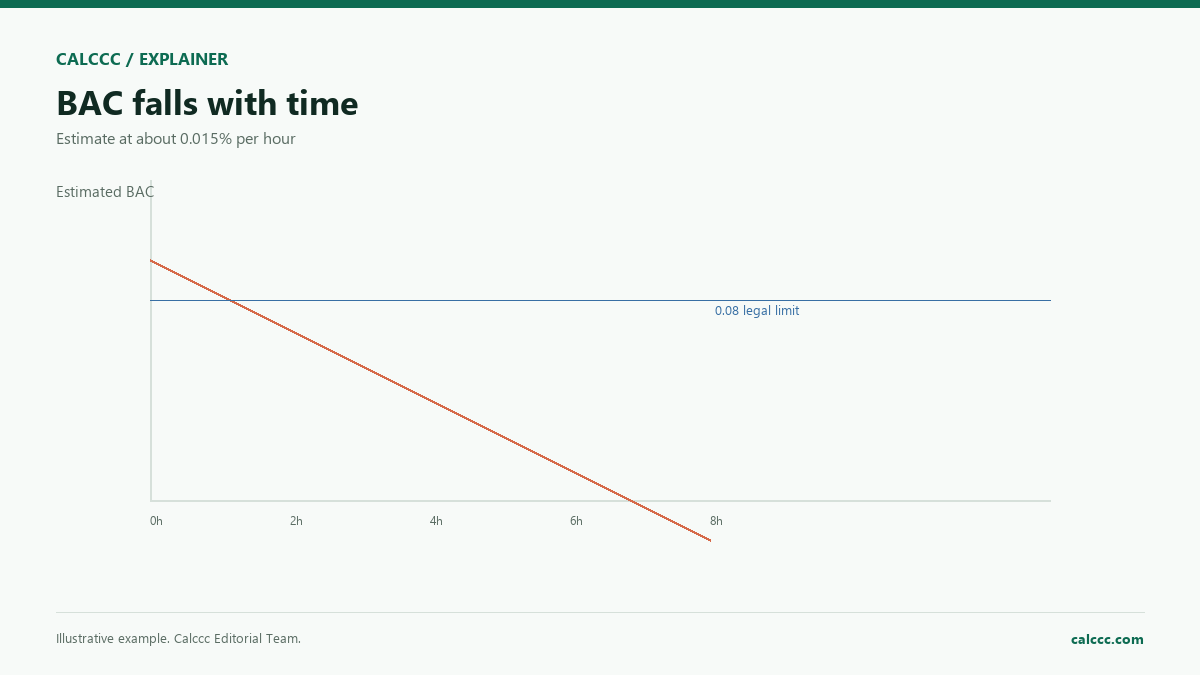
The same drinks measured one hour earlier would show a higher estimate; one hour later, a lower one.
What the result means
Alcohol elimination varies. The formula does not account for food, liver health, medications, or drinking rate. A person can be impaired below 0.08%, and legal limits differ by jurisdiction. The only safe choice after drinking is not to drive.
Common mistakes
- Using the calculator to decide whether to drive.
- Treating the estimate as a breath test.
- Ignoring food, medication, and health conditions.
- Assuming a fixed elimination rate for everyone.
Assumptions and limits
- Standard drinks contain 0.6 fl oz of pure alcohol.
- The formula is Widmark with an average elimination rate.
- No food, medication, or health adjustments.
- Legal limits vary.
- Not a medical or legal measurement.
Frequently asked questions
Can I use this to check if I am legal to drive?
No. It is an educational estimate. Use a calibrated breathalyzer or do not drive.
What is a standard drink?
In the U.S., 12 fl oz of 5% beer, 5 fl oz of 12% wine, or 1.5 fl oz of 40% spirits.
Does food change BAC?
Food can slow absorption and affect the peak, but it does not remove alcohol already consumed. The formula does not model it.
How fast does BAC fall?
On average about 0.015% per hour, but individual rates vary.
Sources
2026 update
How to use the professional output
This page is not just a formula box. The result is designed to be checked, compared, and taken away.
- Professional worksheet. The result includes the inputs used, the method and scope, and a one-variable sensitivity check for finance calculators.
- A/B scenarios. Save two input sets in the browser and compare the primary, secondary, and breakdown figures side by side.
- Print / PDF and CSV. Print a branded worksheet, or export the year-by-year table when the calculator produces one.
The formulas and assumptions above still govern the number. The worksheet makes the estimate auditable; it does not make it a lender quote, tax return, or personalized advice.
Go deeper