


Key takeaways
- One-letter words are A or I. That is usually the first crack.
- Common patterns are anchors. THE, AND, ING, and TION are frequent.
- Repeated letters matter. A double letter in the cipher is a double letter in the plaintext.
- Keep the mapping consistent. One cipher letter cannot mean two plain letters.
- Daily cryptograms are shared. Same quote, no answer in the share.
The mapping contract
A cryptogram is a substitution cipher: each cipher letter stands for exactly one plaintext letter, and the mapping is consistent across the whole quote. The punctuation and spaces are preserved, so word lengths and apostrophes are free clues. The puzzle is not arithmetic; it is pattern matching under a one-to-one constraint.
Start with the shortest words
Find every one-letter word. In normal English it is almost always A or I. If the quote has a two-letter word with a repeated letter, such as “LL”, it is unlikely to be a common word; treat repeated-letter patterns carefully. Apostrophes can indicate contractions or possessives, which narrow the missing letters. A three-letter word ending in a common pattern is often THE or AND.
Frequency and patterns
The most common cipher letters often map to E, T, A, O, I, N, S, H, and R. That is a starting hypothesis, not a rule. Look for double letters first: a doubled cipher letter must map to a doubled plaintext letter. Common double-letter words include “LL” in “WILL” and “SS” in “CLASS”; use the rest of the word to decide. A word ending in “-ING” or “-TION” can unlock several letters at once.
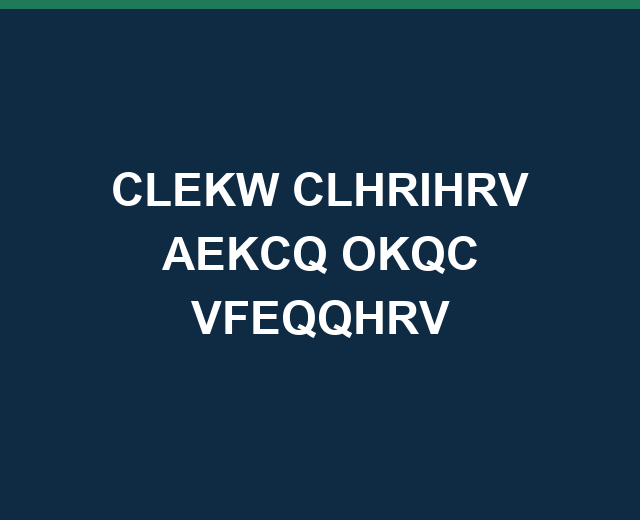
Do not guess a whole word
Guessing a word is fine as a hypothesis, but test it against the mapping. If the guess requires one cipher letter to mean two different plaintext letters, it is wrong. If it creates an impossible double letter, it is wrong. Write the hypothesis lightly, check the short words around it, and only commit when the mapping is consistent with every visible letter.
Daily and themed quotes
Daily Cryptogram uses the same quote for everyone, which makes the puzzle social without spoiling it. Themed packs can focus on short proverbs, money, or everyday sayings; the vocabulary changes, but the method does not. If a quote is short, the pattern clues are denser, so start with the repeated letters and the one-letter words rather than frequency counts.
Build a small evidence table
Keep a short list of what you have proved: a cipher letter that must be E, a position that cannot be T, a two-letter word that must be OF. Do not fill the table with guesses. When a new word appears, check it against the table before trying a new hypothesis. A consistent table prevents the classic cryptogram failure: solving one word correctly and then contradicting it three words later.
Look at word boundaries as constraints. A one-letter word at the start of a sentence is more likely A than I; a one-letter word in the middle is more likely I. A three-letter word followed by a comma is often a conjunction or a short verb. None of these are certainties, but they are cheap tests that can unlock a whole line.
On daily cryptograms, write the decoded phrase out in plain text when you are done. Reading the completed sentence is the best check for a mapping that is technically consistent but semantically wrong. If a word looks like a word but the sentence does not, one letter is probably misplaced.
Read the punctuation
Commas, periods, and question marks tell you where a phrase ends. A short word before a period is often a verb or a pronoun. Use punctuation to segment the quote before you attack the individual letters.
Do not fill a letter just because it is frequent. Fill it because a word pattern or a repeated letter proves it fits.
Write the plaintext under the cipher text as you solve. Seeing the sentence take shape is the fastest way to catch a mapping that is consistent but wrong.
Common mistakes
Assuming E is the most common letter immediately. Frequency is a hypothesis, not a proof. Changing a mapping without checking. One change can break several words. Ignoring apostrophes. They are strong clues. Guessing a whole phrase from one word. Test the mapping across the entire line.
Practice
Play Calccc Cryptogram Easy first, then Classic and Daily. On Easy, use the given letters as anchors. On Classic, start with the one-letter words and do not fill a second letter until the first is consistent with every occurrence.
Frequency analysis
In English, E, T, A, O, I, N, S, H, and R are common. Single-letter words are usually A or I. Three-letter words often include THE, AND, FOR, YOU, or ARE. Look for repeated patterns: a word with double letters, or a repeated three-letter sequence, can reveal the cipher.
Pattern words
Write the pattern of each word, such as ABCB for “that.” Compare patterns across the puzzle. A common phrase or quote can give a foothold. Once a few letters are known, fill them into every occurrence.
Common mistakes
Assuming a letter is correct too early; ignoring punctuation and word length; and forgetting that the cipher may be a quote with unusual names. Keep a pencil list of uncertain letters.
What to compare
Compare the decoded sentence with natural English. If a word is grammatically odd, the substitution is probably wrong.
Frequently asked questions
What is the most common letter in a cryptogram?
E is common in English, but frequency is only a hypothesis. Use one-letter words, repeated letters, and word patterns before relying on frequency.
Can a cryptogram use the same cipher letter for two plain letters?
No. A substitution cryptogram uses a consistent one-to-one mapping. If a guess requires one cipher letter to mean two different plain letters, it is wrong.
Further reading