


Knowledge base
Finance
Practical explainers and worked examples for the calculators in this topic.

Mortgage Payoff: Years and Interest Saved
See how extra principal shortens a mortgage, how much interest it saves, and when investing may be the better choice.
Loan Payoff: Extra Payments and Interest Saved
How extra principal shortens a loan, how much interest it saves, and how to compare payoff with investing.
Debt-to-Income Ratio: What Lenders See
Calculate front-end and back-end DTI, understand what counts as debt, and see why the same income can qualify for different loans.
Real Return: Inflation-Adjusted Growth
Convert a nominal return into purchasing power, and see why a positive return can still lose money in real terms.
After-Tax Real Return: The Return You Keep
Stack fees, taxes, and inflation in the right order to see what an investment actually delivers.
Investment Return: Simple vs Annualized
Calculate total return, annualized return, and CAGR, and avoid comparing investments with different time horizons.
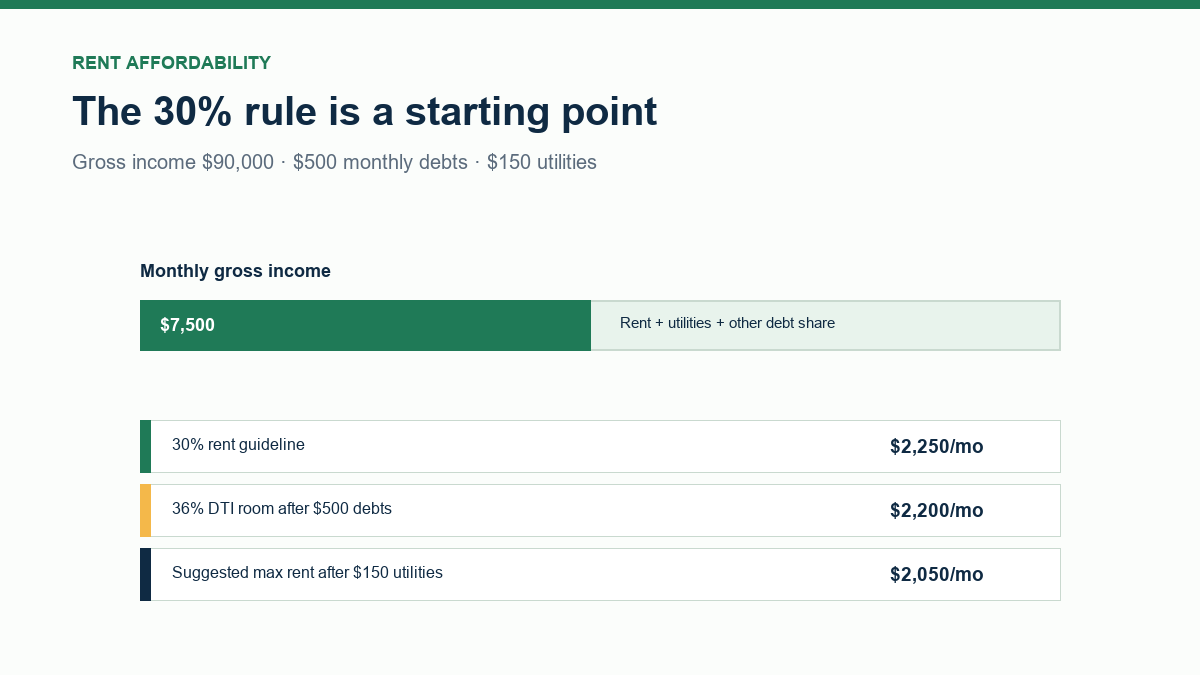
Rent Affordability: How Much Rent Can You Actually Afford?
Use the 30% guideline, debt-to-income limits, utilities, and move-in costs to set a rent budget that still leaves room for savings.
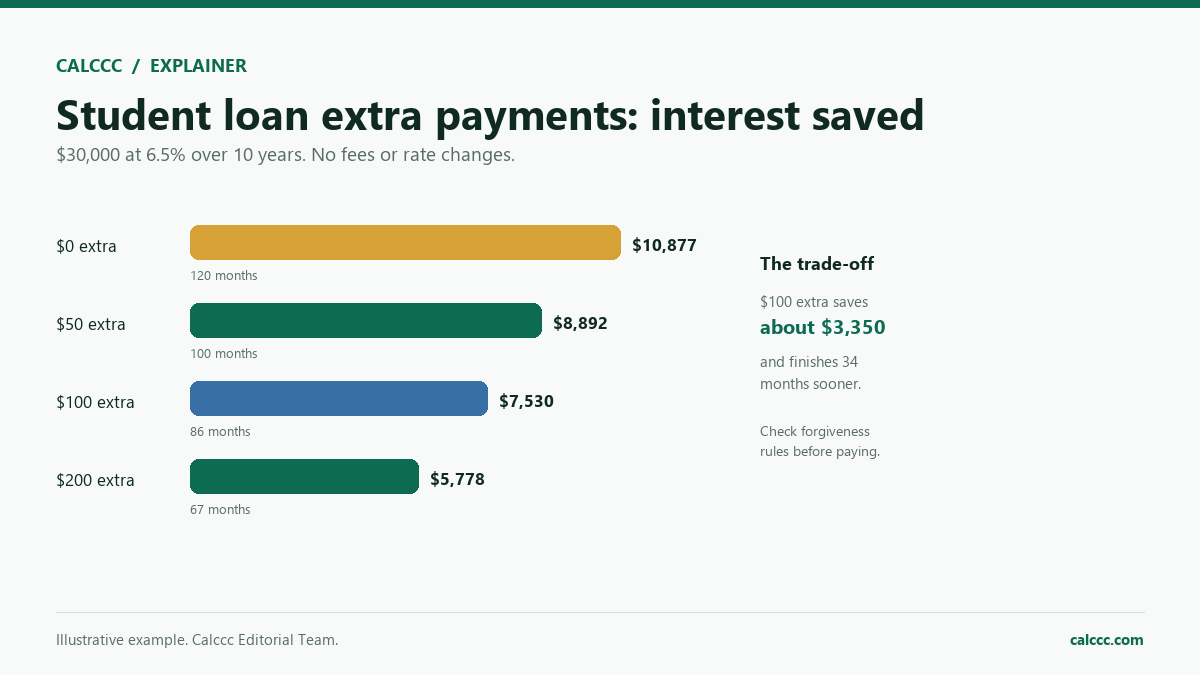
Student Loan Extra Payments: What They Save
Extra payments can cut years off a student loan, but forgiveness plans change the math. See what saves and when to hold back.

Roth IRA Growth: Why Time Does Most of the Work
Contributions are only part of a Roth IRA balance. See how compounding, contribution increases, and inflation change the retirement number.
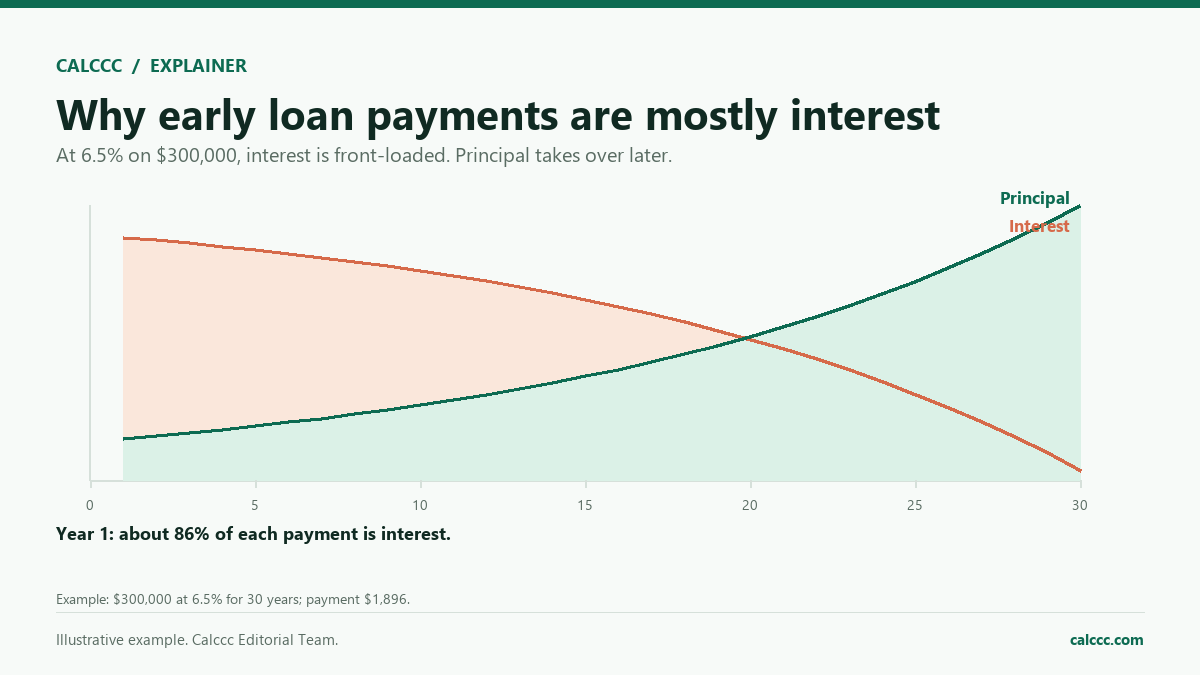
Loan Amortization: Why Early Payments Are Mostly Interest
A fixed payment does not mean a fixed split. We show the amortization formula, a year-by-year example, and how extra payments change the payoff date.