


Knowledge base
Math
Practical explainers and worked examples for the calculators in this topic.

Circle Calculator: Radius, Diameter, Circumference, and Area
One radius fixes a circle's diameter, circumference, and area. Formulas both ways, scaling effects, square-unit conversions, and pi rounding.
Standard Deviation: Population vs Sample
Calculate variance and standard deviation, choose the right denominator, and interpret the spread.
Final Grade Calculator: What You Need on the Final Exam
Work backward from your target grade, weight the final correctly, and see what happens if the final is worth 20%, 30%, or 50%.
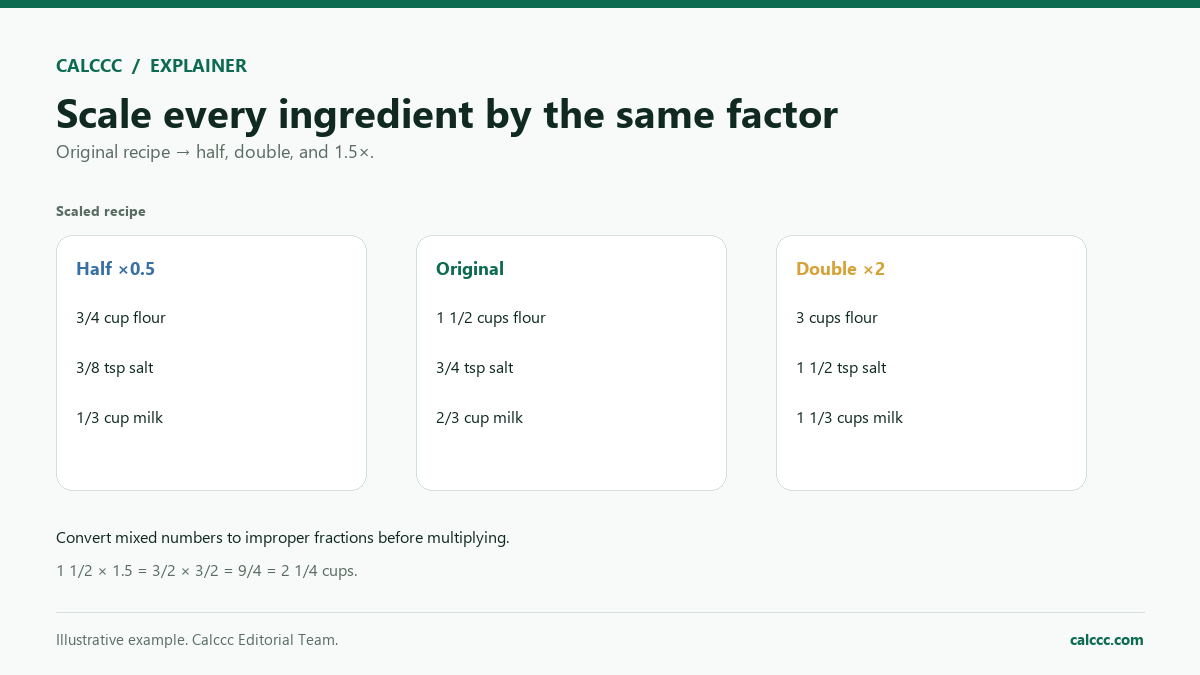
Fractions in Recipes: Scale Without Ruining Dinner
Double a recipe, halve a batch, or convert cups without guessing. A plain-English guide to fraction math in the kitchen, with a worked example.
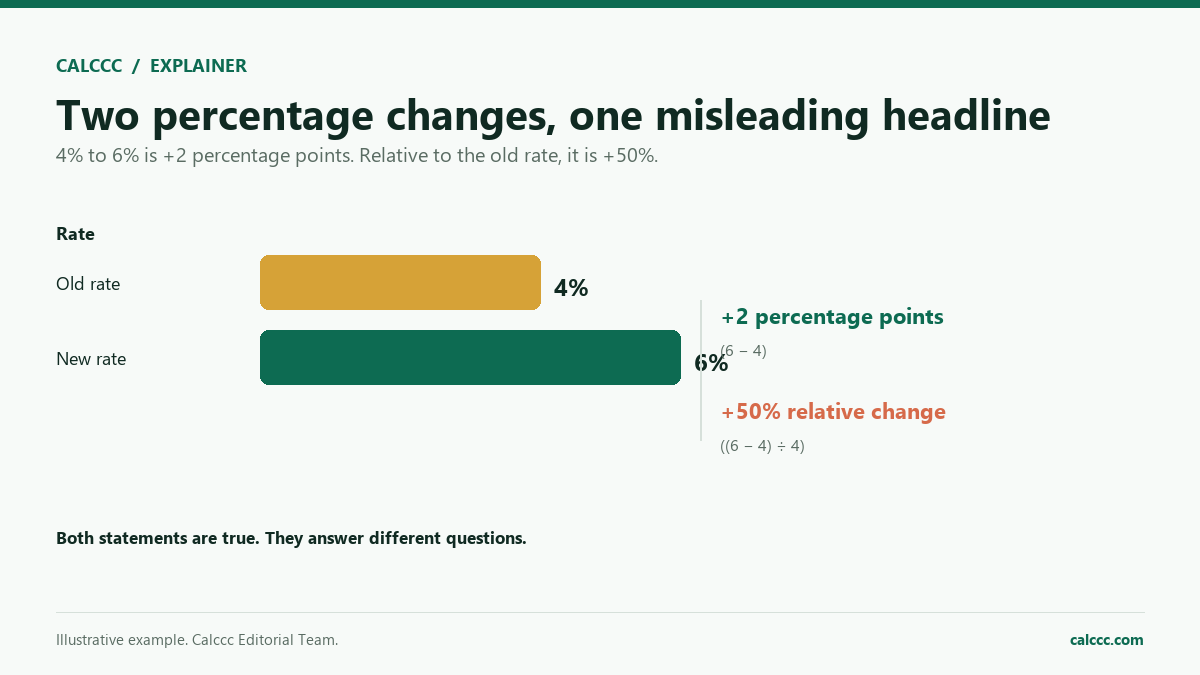
Percentage Change vs Percentage Points: A Practical Guide
A move from 4% to 6% is +2 percentage points but +50% relative change. Learn the formulas, the base problem, and the markup-vs-margin trap.
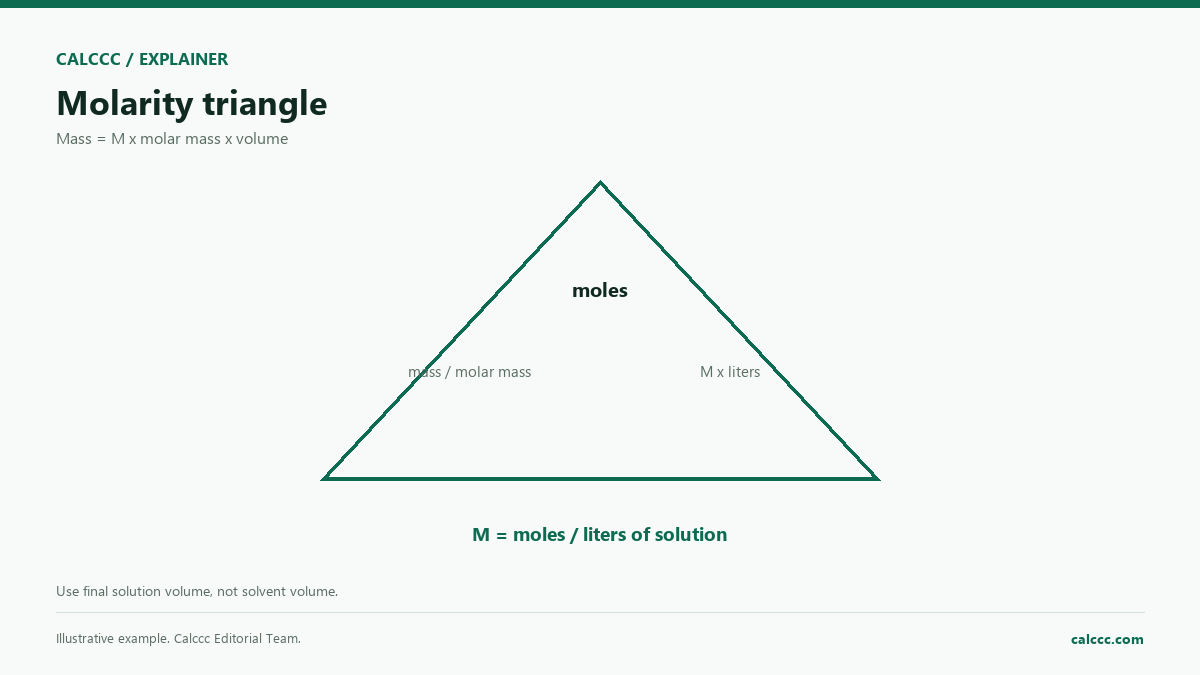
Molarity Without the Unit Mistakes
Molarity is moles per liter of solution. Learn how to solve for concentration, mass, or volume and avoid the solvent-volume trap.
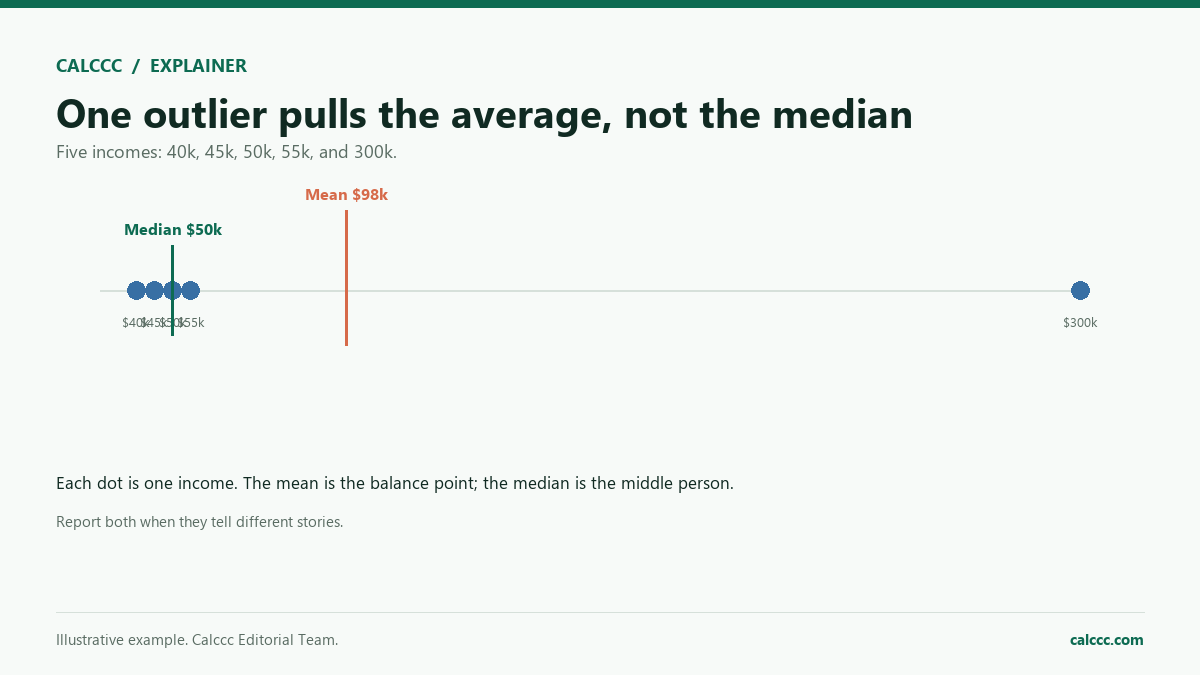
Average vs. Median: Which Number Tells the Truth?
An average can be pulled by one extreme value; a median often describes the typical case better. Learn when to use each, with clear examples.
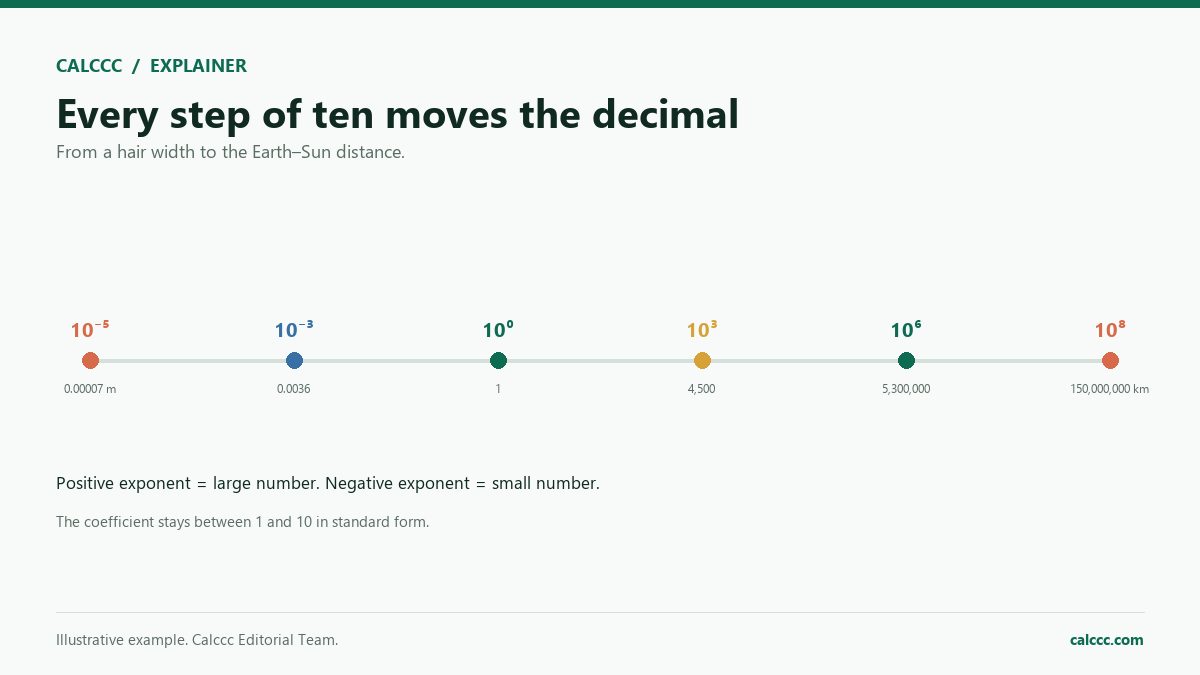
Scientific Notation Explained with Everyday Examples
Scientific notation writes very large and very small numbers as a number times a power of ten. Learn the rules, decimal shifts, and multiplication.
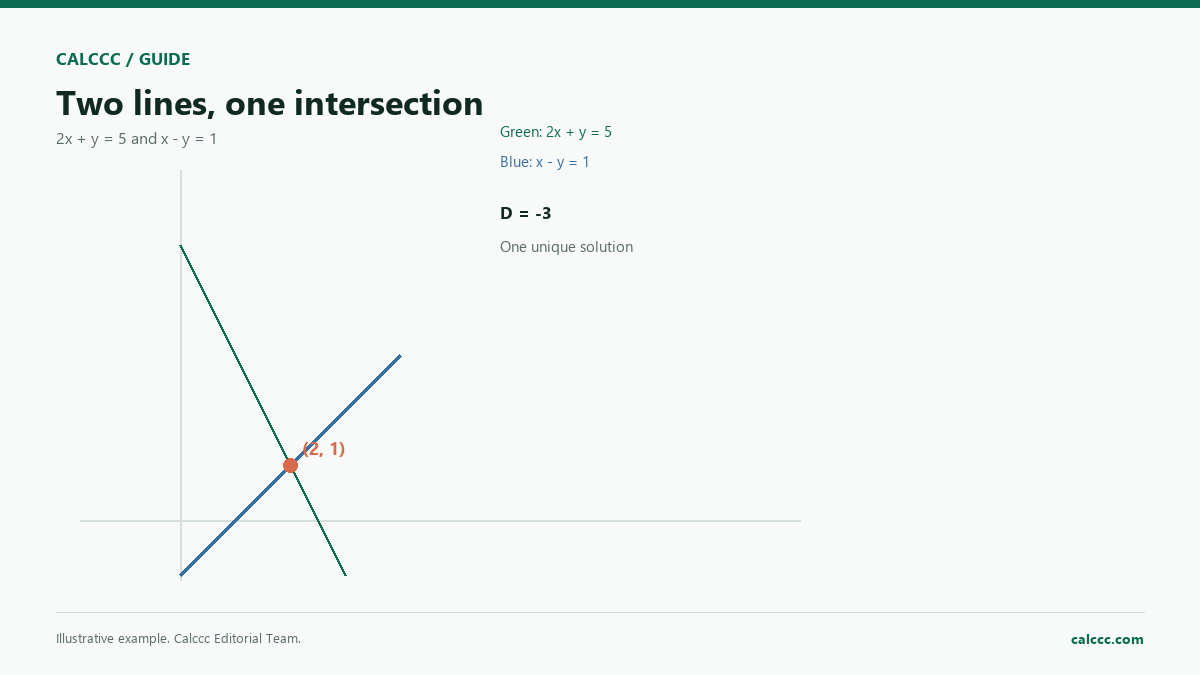
Solving Two Equations Without Guesswork
Substitution, elimination, and Cramer's rule explained with a worked 2x2 system, including the zero-determinant cases.
GPA Calculator: Credit Hours, Weighted GPAs, and What Counts
How GPA is calculated, why credit hours matter, and how weighted, unweighted, and repeated courses change the number.