


Key takeaways
- 0.8 g/kg is the RDA — a minimum to prevent deficiency for most healthy adults.
- Activity, age, and goals can raise the target.
- Spreading protein across meals may help with satiety and muscle use.
- Food-first is usually enough; supplements are optional.
- People with kidney disease should follow clinical advice, not a generic calculator.
What protein does
Protein supplies amino acids used to build and repair muscle, skin, enzymes, hormones, and immune cells. It is also one of the most satiating macronutrients, meaning it can help you feel full. That is why higher-protein diets are popular for weight management, but protein is not a magic switch; calories still matter.
Think of protein as building material, not fuel. Your body can use amino acids for energy if needed, but its main job is structure and repair. That is why the target is usually described in grams per kilogram of body weight, not as a percentage of calories.
The RDA: a floor, not a personalized goal
The RDA of 0.8 g/kg is set to meet the needs of nearly all healthy adults and prevent deficiency. It is not designed to optimize muscle gain, support high training volumes, or address the needs of older adults losing muscle mass.
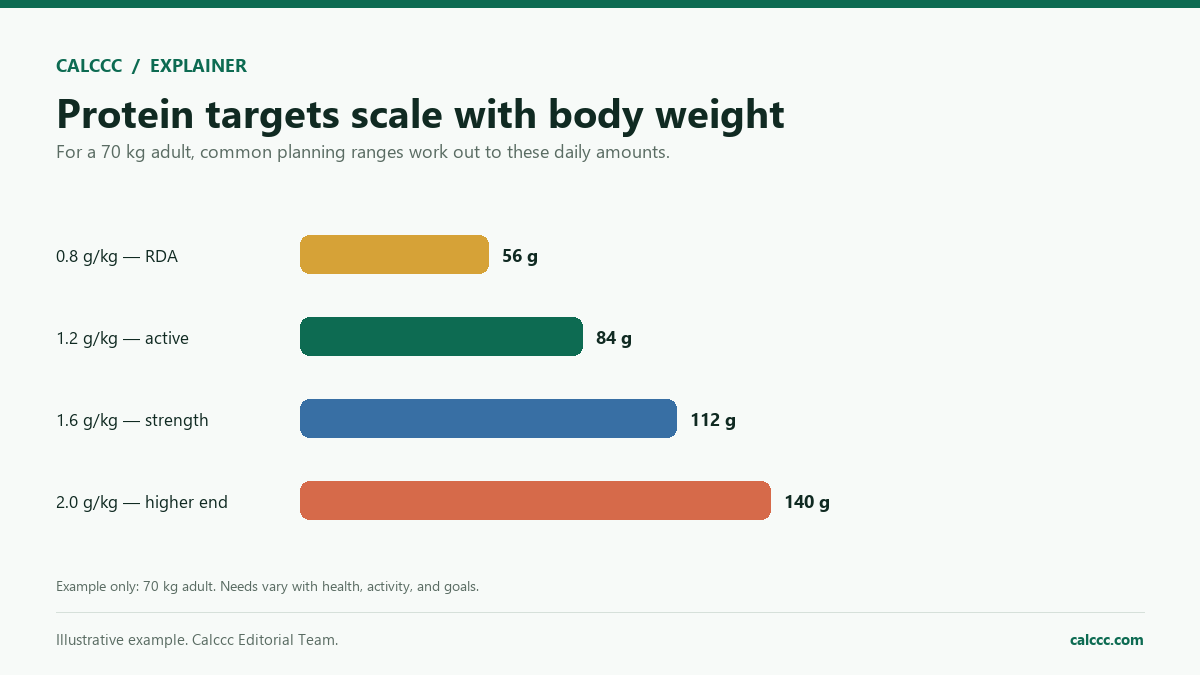
For a 70 kg adult, 0.8 g/kg is 56 grams a day. That is achievable with ordinary meals, but it may be below what an active person wants.
Common planning ranges
| Situation | Protein target | 70 kg example |
|---|---|---|
| Sedentary adult, RDA | 0.8 g/kg | 56 g/day |
| Active adult | 1.2–1.6 g/kg | 84–112 g/day |
| Strength training / muscle gain | 1.6–2.0 g/kg | 112–140 g/day |
| Older adult (muscle preservation) | 1.0–1.2 g/kg, clinical context | 70–84 g/day |
These are planning ranges, not medical prescriptions. People with kidney disease, phenylketonuria, or other metabolic conditions need individualized advice.
How to spread protein across the day
There is no single perfect schedule. A practical approach is to include a protein source at each main meal, roughly 20–40 grams per meal for many adults. This can help with satiety and make the daily total easier to reach.
Examples: eggs and yogurt at breakfast; chicken, fish, tofu, beans, or lentils at lunch; Greek yogurt or cottage cheese as a snack; fish, lean meat, or legumes at dinner. Plant eaters can combine grains and legumes and use tofu, tempeh, soy milk, and seitan.
Protein quality and plant-based diets
Animal proteins are complete, meaning they contain all essential amino acids in useful amounts. Most plant proteins are lower in one or more amino acids, but a varied diet over the day can cover the gaps. Soy, quinoa, buckwheat, and hemp are relatively complete. You do not need to combine specific foods at every meal; variety across the day is enough for most people.
Do you need supplements?
Protein powder is convenient, not necessary. It can help if you struggle to reach the target, have a small appetite, or need a quick post-workout option. Food sources also provide fiber, vitamins, and minerals that powder may not.
If you use powder, check the label for added sugars, caffeine, and artificial sweeteners if those matter to you. A simple whey, soy, or pea protein is usually enough.
What about kidney health?
For people with healthy kidneys, higher-protein diets within reasonable ranges are generally considered safe in the research literature, but individual needs vary. People with chronic kidney disease may need to limit protein and should follow a clinician’s or dietitian’s plan. Do not use a generic calculator to manage kidney disease.
2026 calculator update: what changed
The linked calculator has been upgraded. It now includes a professional worksheet with the inputs used, the method and scope, and a one-variable sensitivity check for finance tools. You can save two input sets as Scenarios A/B and compare the results side by side. The Print / PDF action produces a branded worksheet, and table-producing calculators can export a CSV.
For health tools, the worksheet makes the inputs and assumptions visible, but it does not replace a clinician. Use the print view when you want to discuss the result with a professional.
Frequently asked questions
Is 0.8 g/kg enough for muscle gain?
It is the RDA, not an optimal muscle-building target. Most strength-training guidance uses 1.6–2.0 g/kg, combined with resistance training and enough calories.
Can I eat all my protein in one meal?
You can, but spreading it across meals may be easier on appetite and more practical. The total daily intake matters most.
Is too much protein bad?
Very high intakes can crowd out other nutrients and may be inappropriate for some medical conditions. For healthy adults, a moderate higher-protein diet is generally safe, but individual advice matters.
Do plant proteins count?
Yes. A varied plant-based diet can meet protein needs. Pay attention to total amount and variety, and consider fortified foods for nutrients such as vitamin B12.
How we checked this guide
We compared the 0.8 g/kg RDA with common sports-nutrition and older-adult ranges, then checked the calculator’s output for a 70 kg example. The ranges are presented as planning guidance, not individualized medical advice. People with kidney disease or other conditions should use clinical guidance.
Further reading
Keep exploring
Decision path