


What this calculator does
This paint calculator estimates how much paint a room needs before you buy. It measures the four walls, subtracts a standard allowance for doors and windows, multiplies by the number of coats, and divides by the coverage on the label. The result is a practical starting point for a shopping list. Because coverage varies with surface texture and paint color, it is better to round up than to run short in the middle of a wall. A single gallon usually covers a range printed on the label, and that label figure is the best number to use.
How to use it
- Enter room length, width, and wall height.
- Set the number of coats and the number of doors and windows.
- Enter the coverage per gallon from the paint label.
- Add a price per gallon and, in Advanced options, a waste allowance or primer coats.
- Review gallons, cans to buy, primer, and estimated cost.
How it works
Example calculations
Example 1: 12 × 10 × 8 room
Gross wall area is 352 sq ft. Two doors and two windows reduce it to 282 sq ft. Two coats need about 1.77 gallons with a 10% waste allowance, so buy 2 one-gallon cans.
Example 2: paint cost
At per gallon, 2 cans cost about before tax.
Example 3: primer
One primer coat on the same walls needs about 0.89 gallons, so one can is enough for a small room.
What the result means
Coverage on the label is a guide; textured walls, dark colors, and spraying can use more paint. The waste allowance covers touch-ups and roller loss. Primer is separate from paint and may need its own coverage rate. Ceiling and trim are not included unless measured separately.
Common mistakes
- Measuring the floor area and treating it as wall area.
- Forgetting to subtract doors and windows.
- Multiplying by coats after dividing by coverage.
- Buying exactly the calculated gallons with no spare for touch-ups.
- Using the same coverage for bare drywall or a textured wall.
Assumptions and limits
- Door area is estimated at 20 sq ft and window area at 15 sq ft.
- Coverage per gallon is the same for every coat.
- Waste allowance applies to paint and primer.
- One can equals one gallon.
- Ceiling, trim, and surface preparation are excluded.
Frequently asked questions
Should I subtract doors and windows?
Yes, if you are not painting them. The calculator uses 20 square feet per door and 15 per window, which is a common allowance. Subtract less for small openings or more for large sliding doors.
How many coats should I use?
Two coats is common for a uniform finish, especially with a color change. One coat may be enough when repainting the same color over a similar shade.
Does this include the ceiling?
No. The formula covers the four walls only. For a ceiling, multiply length by width and divide by coverage, then add that to your total.
Why is my paint covering less than the label says?
Coverage assumes an ideal surface. Porous drywall, texture, humidity, and application method can all increase how much paint you use.
Should I buy primer too?
Primer is a separate product and is not included. New drywall, bare wood, stains, and major color changes often need a primer coat.
What if I am painting trim and doors?
This estimate is for walls. Trim and doors are usually measured separately and painted with a different product, so add those amounts to your shopping list.
Sources
2026 update
How to use the professional output
This page is not just a formula box. The result is designed to be checked, compared, and taken away.
- Professional worksheet. The result includes the inputs used, the method and scope, and a one-variable sensitivity check for finance calculators.
- A/B scenarios. Save two input sets in the browser and compare the primary, secondary, and breakdown figures side by side.
- Print / PDF and CSV. Print a branded worksheet, or export the year-by-year table when the calculator produces one.
The formulas and assumptions above still govern the number. The worksheet makes the estimate auditable; it does not make it a lender quote, tax return, or personalized advice.
Go deeper
Guides that explain the math
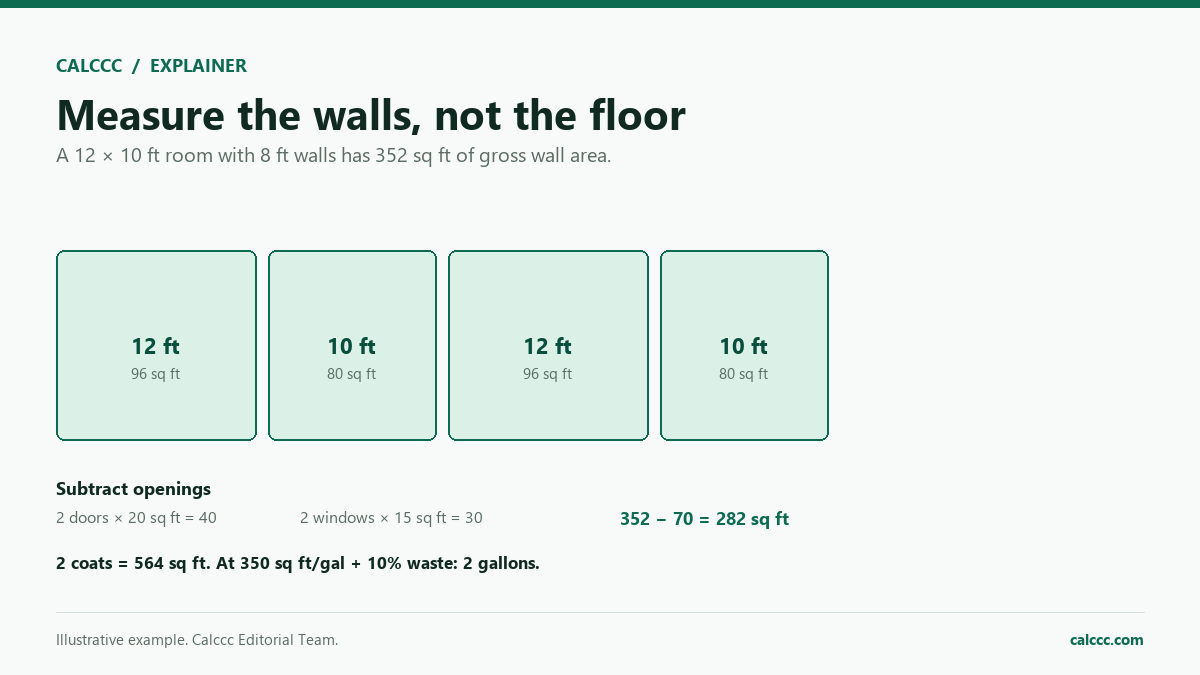
How Much Paint Do I Need? A Room-by-Room Method
Measure the walls, subtract openings, multiply by coats, then add waste. A full room example shows why the floor-area shortcut fails.
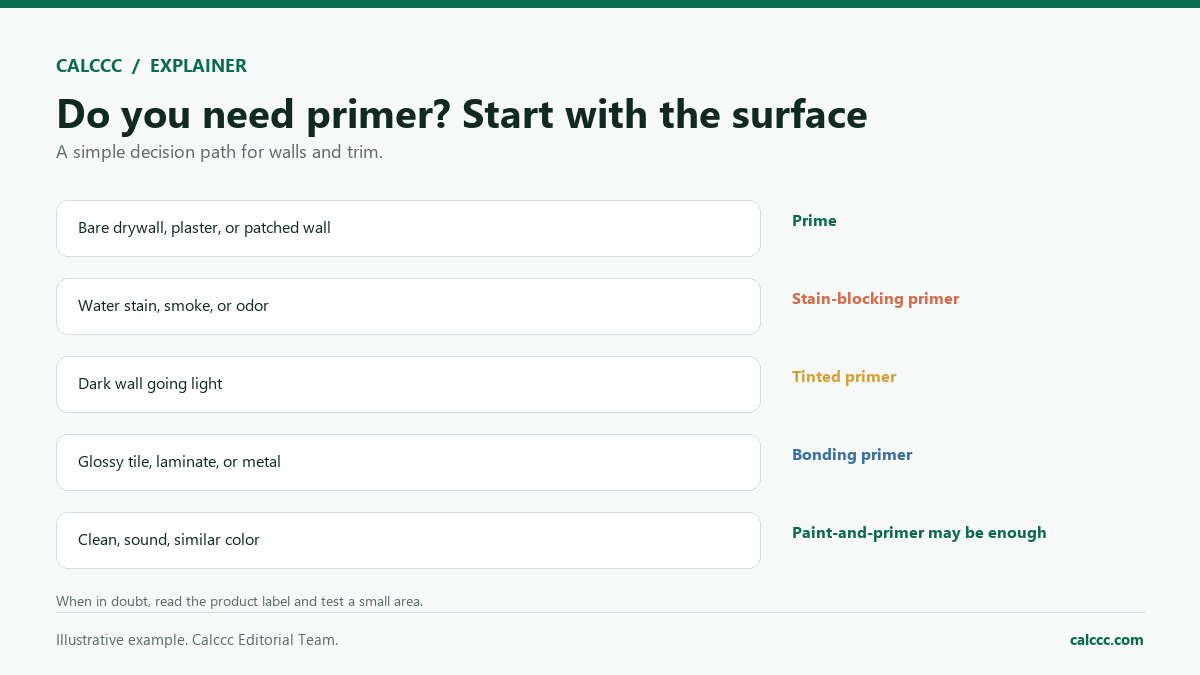
Do You Need Primer? A Plain-English Paint Guide
Primer is not always required, but it solves specific problems: bare surfaces, stains, dark colors, and adhesion. Here is when to use it and when to skip it.