


Knowledge base
Health
Practical explainers and worked examples for the calculators in this topic.
Calorie Goal: Deficit, Surplus, and Rate of Change
A calorie goal is a rate of change. Estimate maintenance, convert a deficit into pounds per week, and see why the 3,500-calorie rule drifts as weight falls.
Sleep Duration: Age Ranges, Debt, and Consistency
Sleep needs are age-banded. See the recommended ranges, how to average a week, and what sleep debt and consistency actually mean for adults.
Calorie Burn: MET, Weight, and Time
Estimate calories burned from activity intensity, body weight, and duration, and understand why the number is approximate.
Body Fat: Methods, Formulas, and Error Bars
Compare BMI, waist-based formulas, calipers, and DEXA, and understand why body fat estimates differ.
Steps to Miles: Stride, Height, and Distance
Convert steps to miles using stride length, and see why the same step count can be different distances.
Pace Calculator: Min/Mile, Speed, and Finish Time
Convert pace to speed, plan race splits, and account for terrain and weather.
Ideal Weight: Formulas and Their Limits
Compare Devine, Robinson, Miller, and Hamwi formulas, and see why a range is more useful than one number.
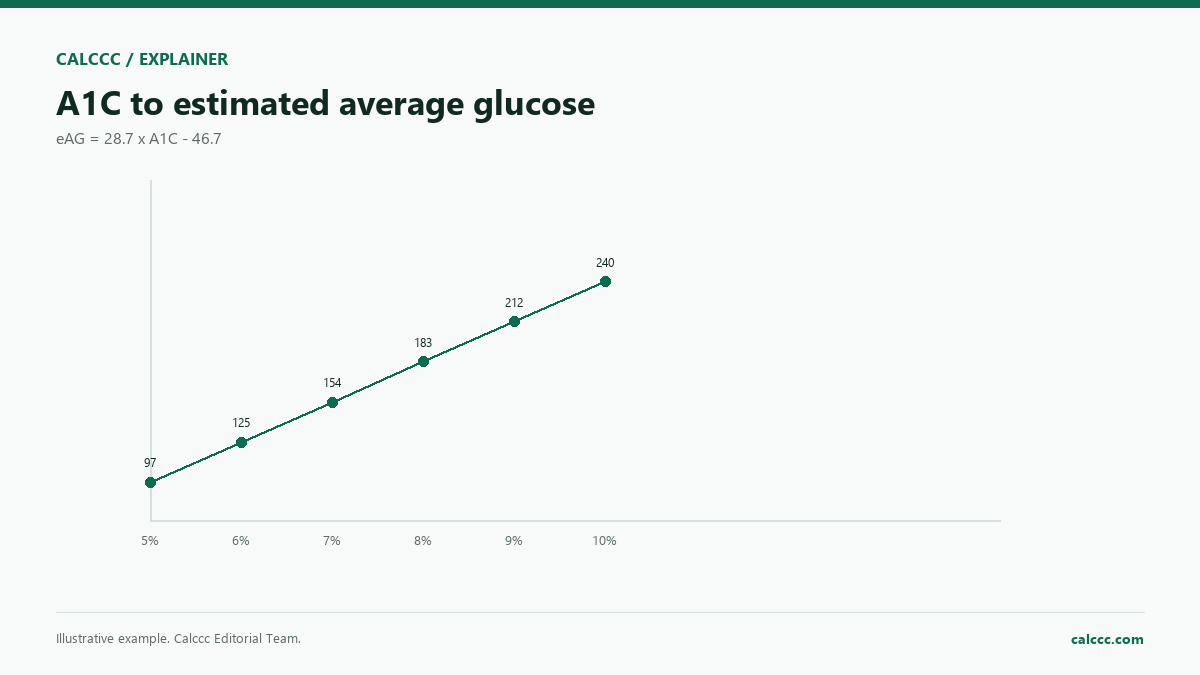
A1C and eAG: Turning a Percentage into Daily Numbers
A1C is a long-term average, and eAG translates it into the units on a glucose meter. Learn the formula, the limits, and what the number does not say.
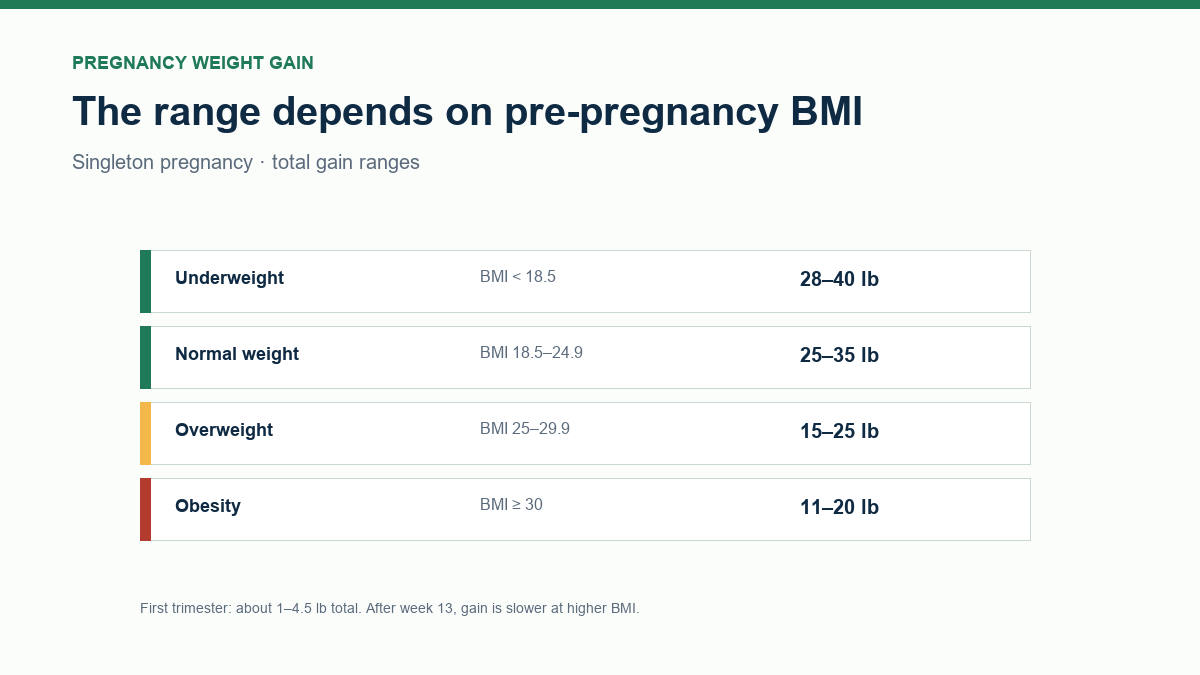
Pregnancy Weight Gain: BMI Ranges and What the Numbers Mean
Understand singleton pregnancy weight-gain ranges by pre-pregnancy BMI, how the first trimester differs, and why the weekly number is a planning aid, not a prescription.
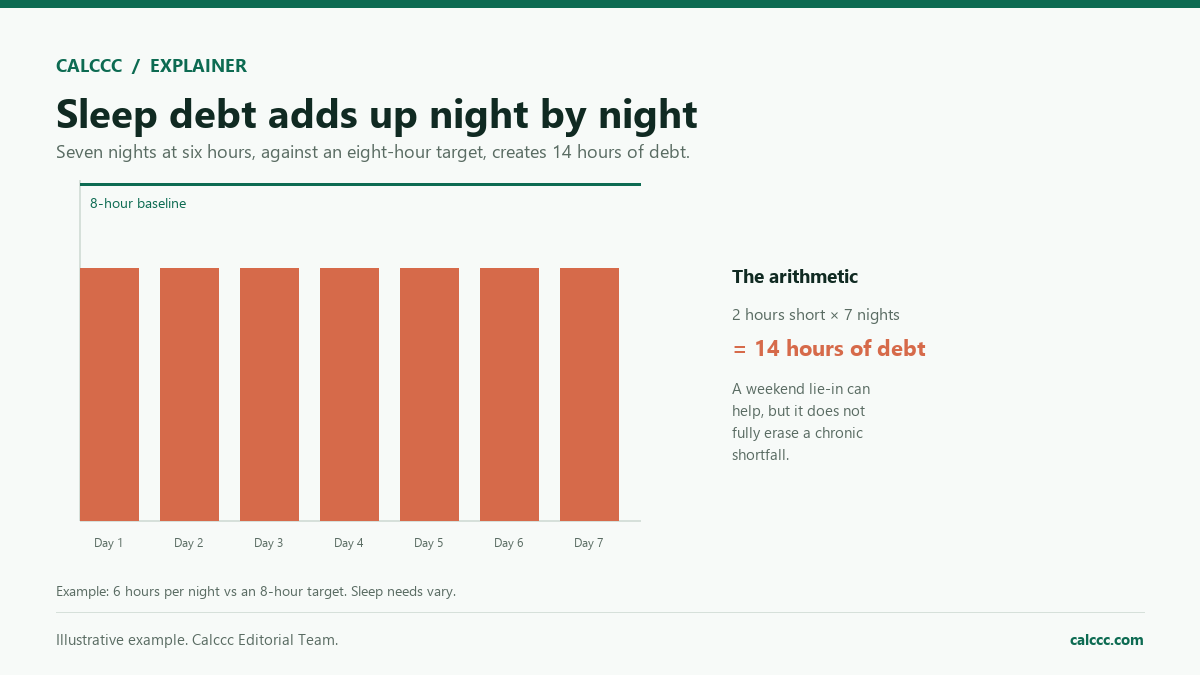
Sleep Debt: Can You Really Catch Up?
Sleep debt is the gap between the sleep you need and the sleep you get. Learn how it adds up, what a weekend lie-in can and cannot fix, and when to get help.