


Knowledge base
Health
Practical explainers and worked examples for the calculators in this topic.
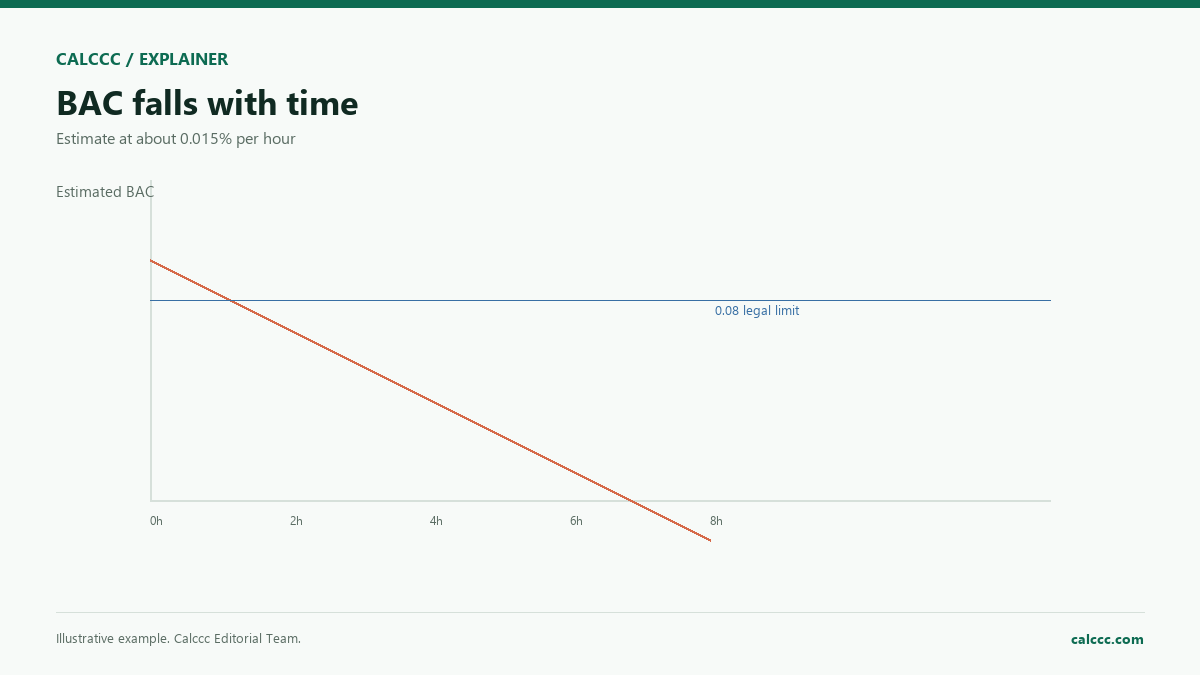
Blood Alcohol Content: What the Number Can and Cannot Tell You
BAC is an estimate shaped by drinks, weight, sex, time, and biology. Learn the formula, the limits, and why it is not a driving decision tool.
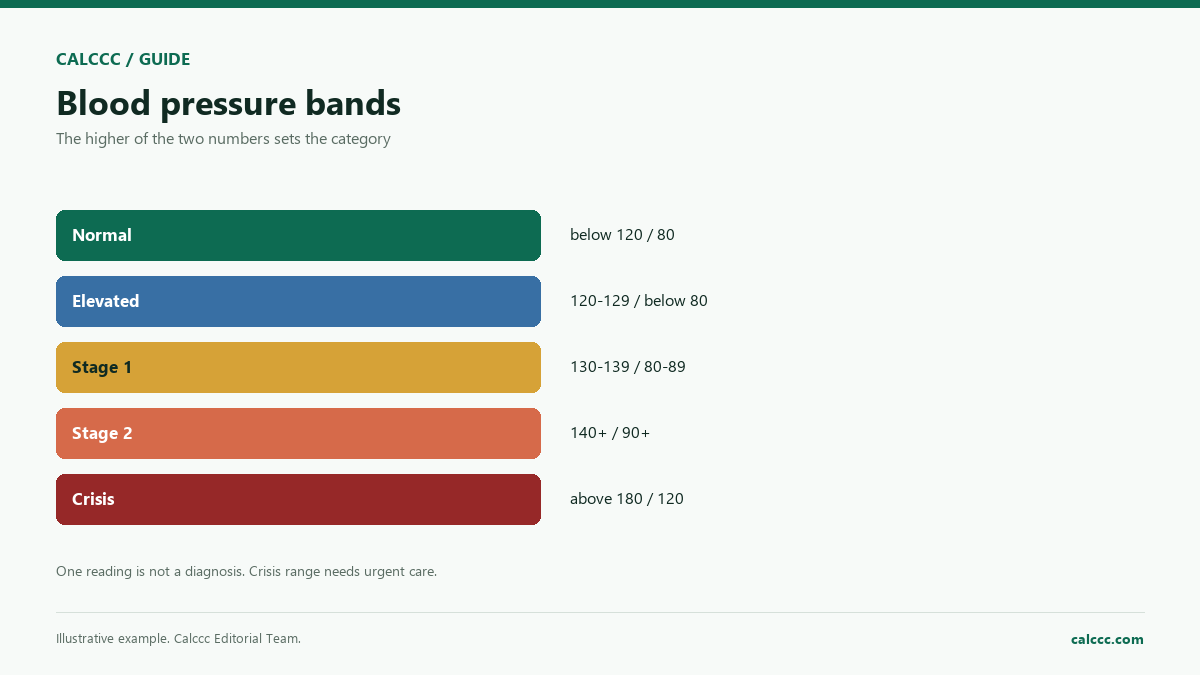
Blood Pressure Numbers: What They Mean
Systolic, diastolic, pulse pressure, and the crisis range explained. Learn how to measure properly and why one reading is not a diagnosis.

Sleep Cycle Calculator: 90-Minute Cycles and Wake-Up Timing
Why waking at the end of a cycle can feel easier, how to count backward from a wake time, and what the 90-minute rule cannot do.
Water Intake: Baseline, Activity, and Why the 8×8 Rule Is Loose
Estimate a daily water target from body weight and activity, then adjust for climate, food, and health.
Due Date Calculator: LMP, Ultrasound, and the 40-Week Range
How a due date is estimated, why only a small share of babies arrive on it, and when an ultrasound changes the date.
BMR vs TDEE: What the Number Means and What It Does Not
BMR is the energy you burn at rest. TDEE adds activity. Learn the formula, the assumptions, and why the estimate can be off.
Macro Calculator: Protein, Carbs, Fat, and the Calorie Budget
How to split calories into protein, carbohydrates, and fat, and why the right split depends on the goal.
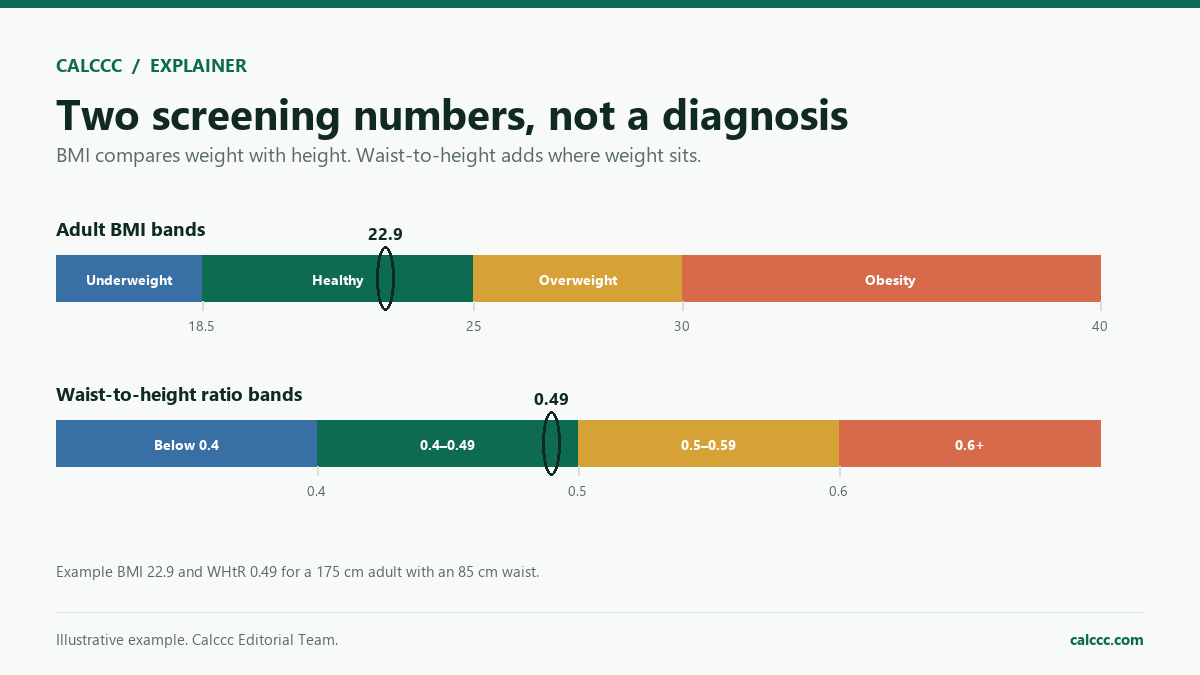
BMI vs Waist-to-Height: What the Numbers Actually Mean
BMI is a screening tool, not a diagnosis. We compare it with waist-to-height ratio, explain how to measure both, and show where each one misleads.
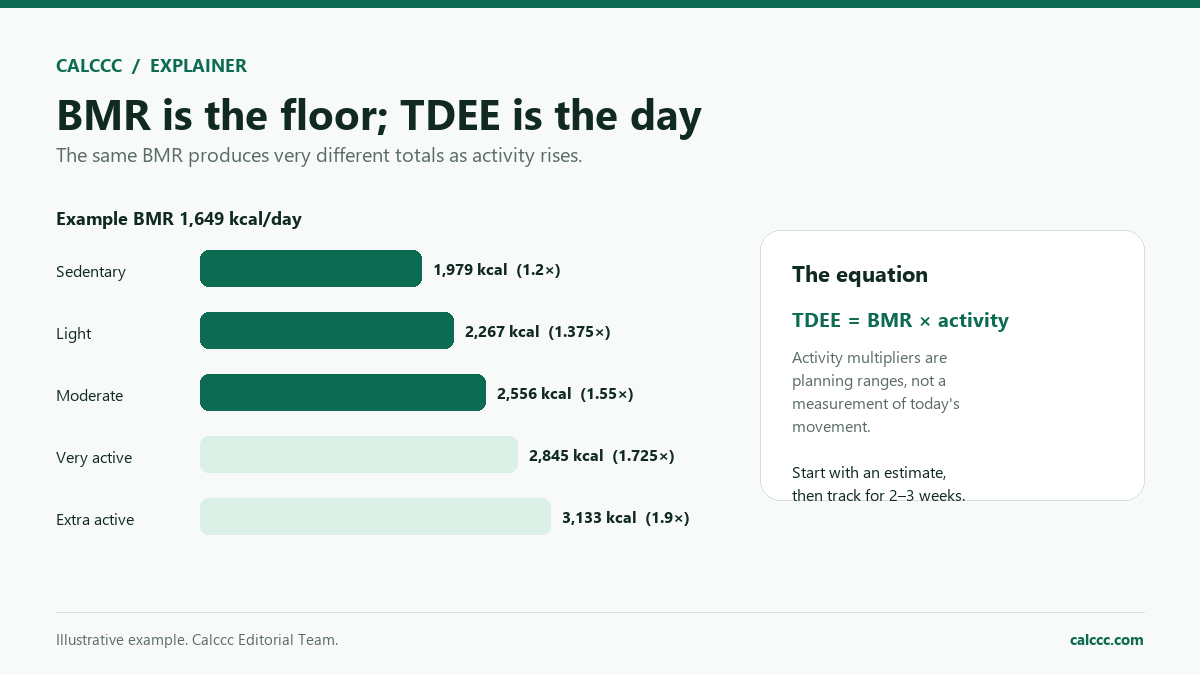
TDEE vs BMR: What’s the Difference and Which Should You Use?
BMR is the energy you need at rest; TDEE is the energy you use in a day. Compare the equations, activity multipliers, and assumptions.
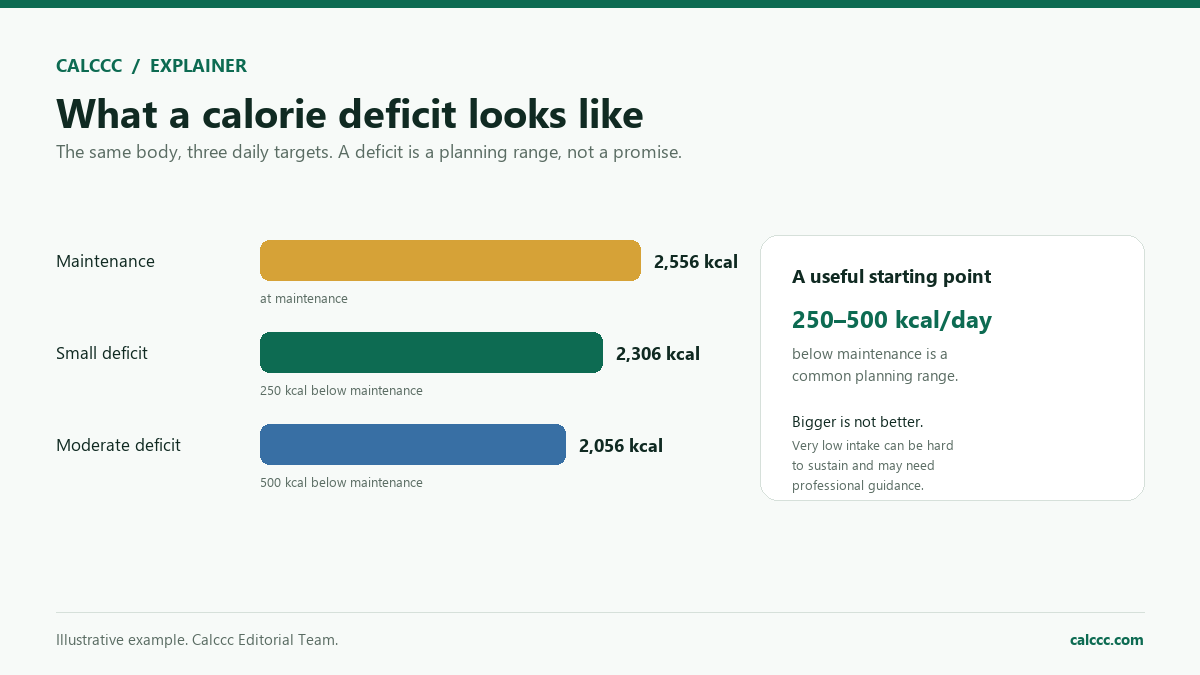
Calorie Deficit Explained: How Much Should You Cut?
A calorie deficit is the gap between what you burn and what you eat. Learn how to estimate it and why 500 calories is only a starting point.